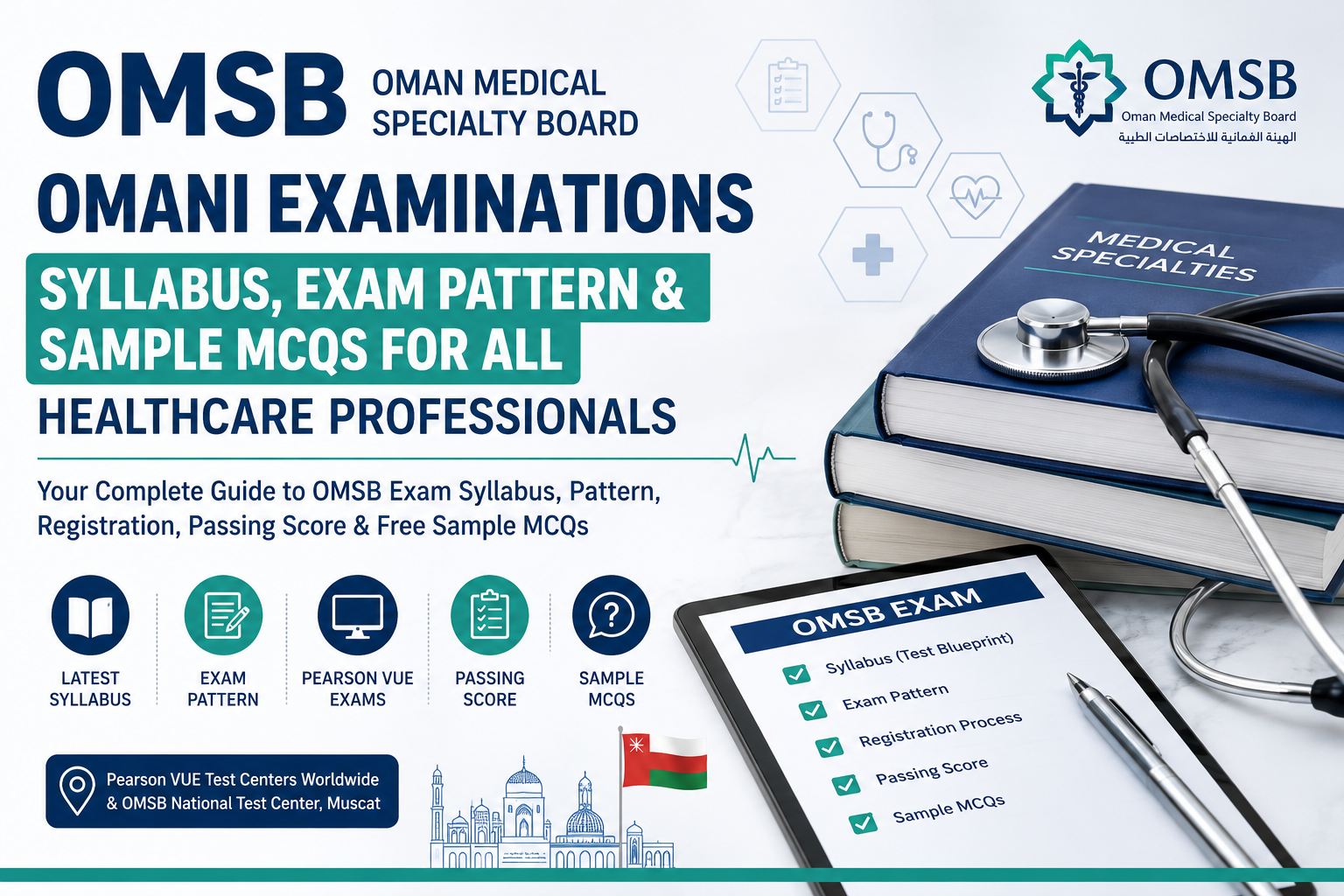
Preparing for the OMSB (Oman Medical Specialty Board) licensing examination can feel overwhelming, especially if you’re unsure about the registration process, exam syllabus, or the type of questions you’ll face. Whether you’re a doctor, nurse, pharmacist, dentist, or allied health professional, understanding the exam format and practicing with quality sample MCQs can significantly improve your chances of success.
The Oman Medical Specialty Board (OMSB) conducts the Omani Licensing Examinations for healthcare professionals who wish to obtain a license to practice in Oman. These computer-based exams are delivered through Pearson VUE test centers worldwide, with the OMSB National Test Center in Muscat serving candidates residing in Oman.
In this guide, you’ll find the latest OMSB exam syllabus (test blueprint), exam pattern, eligibility details, registration process, passing score, and free sample MCQs for various healthcare professions. All information is compiled from the official OMSB guidelines to help you prepare with confidence and understand the examination requirements before scheduling your exam.
How to Register (Common to All Exams)
- Go to the OMSB website: www.omsb.gov.om
- Click on “Professional Competence Affairs”
- Select Occupational Classification Testing Section
- Click on “Online Services”
- Visit the Pearson VUE website to schedule, reschedule, or cancel your exam: https://home.pearsonvue.com/omsb
- Pay the examination fee (varies by specialty — see below)
Venue: Candidates residing in Oman sit the exam at the Oman Medical Specialty Board / OMSB National Test Center, Innovation Park, Muscat. Candidates residing outside Oman sit the exam at any Pearson VUE center worldwide.
Results: Emailed to the candidate’s registered email within 24 hours of completing the exam.
Quick Comparison Table
| Examination | MCQs | Duration | Fee (USD) | Passing Score |
|---|---|---|---|---|
| Nurses – BSN (OEN) | 100 | 2h 30m | 200 | 60% |
| General Practitioners (OEGP) | 150 | 2h 45m | 220 | 60% |
| Medical Laboratory Scientists (OEMLS) | 100 | 2h 30m | 200 | 55% |
| Pharmacists (OEP) | 100 | 2h 30m | 200 | 60% |
| Pediatrics (OEPEDS) | 100 | 2h 30m | 220 | 65% |
| Obstetrics & Gynecology (OEOG) | 100 | 2h 30m | 220 | 65% |
| General Surgery (OEGS) | 100 | 2h 30m | 220 | 65% |
| General Dentistry (OEGD) | 100 | 2h 30m | 220 | 65% |
| Anesthesia (OEA) | 100 | 2h 30m | 220 | 65% |
| Orthodontists (OEORDNT) | 100 | 2h 30m | 220 | 65% |
| Physiotherapists (OEPH) | 100 | 2h 30m | 200 | 55% |
Blueprint category weights may vary by up to (+/-) 5% in each category on the actual exam, per OMSB.
1. Omani Examination for Nurses – BSN (OEN)
Purpose: Ensures safe practice and quality of care among nurses with a Bachelor’s Degree in Nursing (local or international graduates), and promotes critical thinking in clinical nursing judgment.
Eligibility: Bachelor’s Degree in Nursing from a recognized local or international college.
Format: 100 single-best-answer MCQs · 7 domains · 2 hours 30 minutes · Fee: 200 USD
Syllabus / Test Blueprint
| Content of Nursing Domains | Total Percentage/Weightage |
|---|---|
| Principles of Care (Standards of Care, Legal and Ethical Practice, Leadership and Management) | 20% |
| Evidence-Based Practice Including Research & Epidemiology | 5% |
| Adult Health | 30% |
| Maternal Health | 10% |
| Child Health | 10% |
| Mental Health | 10% |
| Community Health & Gerontology | 15% |
| Total | 100% |
The exam also covers competencies underpinning basic nursing skills, knowledge, and attitude across the lifespan: professional practice; legal/ethical practice and culturally congruent care; infection prevention and control; patient safety; health promotion and disease prevention; leadership and management; nursing care; evidence-based practice; critical thinking and problem-solving; and communication/interdisciplinary collaboration.
🎯 Unlock Free Mock Test
Enter your email and select your exam category.
Suggested Resources
- Leadership Role and Management Functions in Nursing — Marquis & Huston
- Kozier & Erb’s Fundamentals of Nursing — Berman, Synder, Frandsen
- Health Assessment in Nursing — Weber
- Nursing Research: Principles and Methods — Polit & Beck
- Essential Epidemiology — Webb & Bain
- Brunner & Suddarth’s Textbook of Medical-Surgical Nursing
- Introduction to Critical Care Nursing — Sole, Klein, Mosely
- Maternal and Child Health Nursing — Pillitteri
- Wong’s Essentials of Pediatric Nursing — Hockenberry, Rodgers, Wilson
- Essentials of Psychiatric Mental Health Nursing — Townsend
- Psychosocial Nursing for General Patient Care — Gorman & Sultan
- Community & Public Health Nursing — Allender, Rector, Warner
- Gerontological Nursing — Eliopoulos
- Public/Community Health and Nursing Practice — Savage
Passing Score: 60%
Sample Questions
1. A patient on morphine infusion (5 mg/hr) for renal colic develops severe shortness of breath, vomiting, HR 120, BP 88/56, SpO2 88%. Which medication is the antagonist for morphine overdose?
A. Fentanyl
B. Vitamin K
C. Naloxone
D. Protamine sulfate
2. A newborn with myelomeningocele — which intervention prevents injury to the sac?
A. Keep newborn warm with a blanket
B. Place the newborn in a prone position
C. Apply dressing with betadine and saline
D. Maintain restraints to the newborn’s legs
3. An occupational health nurse identifies a factory worker with hand-foot-and-mouth disease. What is the priority action?
A. Immediately treat the worker and close the factory for two weeks
B. Refer the worker to infectious diseases clinic and screen all exposed workers
C. Contact OSHA and isolate the worker
D. Contact the factory CEO and educate workers
4. A pregnant woman complains of frequent lower-extremity muscle cramps. Which supplement should be increased?
A. Iron
B. Calcium
C. Vitamins
D. Phosphorus
5. Which client is at highest risk for involuntary commitment?
A. A client who is unkempt
B. A client with hallucinations
C. A client with suicidal ideations
D. A client with a depressed mood most of the time
6. A nurse helps a client with end-stage renal failure cope with alternatives. What action reflects the counseling process?
A. Provide the client with alternatives and recognize choices
B. Consider client’s needs and goals that motivate new adjustments
C. Assess client’s overall understanding and readiness to learn
D. Collaborate with other team members to ensure sustainability
7. Which nursing process step is used in research to determine the focus and aim of the research?
A. Planning
B. Evaluation
C. Assessment
D. Implementing
Answer Key: 1. C | 2. B | 3. B | 4. B | 5. C | 6. C | 7. C
Download Now: Nurse Prometric/Pearson VUE Exam MCQs PDF
2. Omani Examination for General Practitioners (OEGP)
Purpose: Assesses graduates’ critical thinking and decision-making to accurately diagnose and manage medical conditions using proper diagnostic procedures, medications, prevention strategies, and referrals.
Eligibility: BSc in Medicine from a recognized local or international medical college; completed approved/accredited internship program.
Format: 150 single-best-answer MCQs · 6 domains · 2 hours 45 minutes · Fee: 220 USD
Syllabus / Test Blueprint
| Main Categories | Weight% |
|---|---|
| Women’s Health | 13 |
| Child Health | 7 |
| Medicine | 39 |
| Public/Community Health | 11 |
| Surgery | 18 |
| Emergency | 12 |
| Total | 100% |
Definition of Terms
- Basic Knowledge/Diagnosis — fundamental anatomy, physiology, and pathophysiology used to identify a condition via symptoms and signs.
- Investigation — specific tests to reach a conclusive diagnosis or rule out causes.
- Pharmacological Management — treatment via medication.
- Non-Pharmacological Management — interventions without medication.
- Prevention — Primary (before health effects occur), Secondary (early screening), Tertiary (limiting impact post-diagnosis).
Suggested References
- Oxford Handbook of General Practice (5th ed.) — Simon, Everitt, van, Hussian, Nash, Peet
- Current Diagnosis & Treatment in Family Medicine (5th ed.) — South, Matheny, Lewis
- Practical General Practice (7th ed.) — A. Staten & P. Staten
- MOH manuals (Google Drive)
- The Merck Manual of Diagnosis and Therapy (19th ed.) — Porter & Kaplan
- John Murtagh’s General Practice (5th ed.)
- British National Formulary (BNF) — bnf.org
- Oxford Handbook of General Practice (4th ed.)
Passing Score: 60%
Sample Questions
1. A 3-year-old boy presents with fever, sore throat, hoarseness, irritability, and drooling of saliva, RR 28, T 39, HR 110. What is the most appropriate next step?
A. Discharge on oral antibiotic
B. Give dexamethasone IM
C. Referral to emergency
D. Start epinephrine nebulization
2. A 33-year-old man presents with cramping right flank pain radiating to the groin, nausea, vomiting, chills, and RBC++ on urinalysis. What is the most likely diagnosis?
A. Acute appendicitis
B. Renal colic
C. Testicular torsion
D. Urinary tract infection
3. A 5-year-old with poor urine stream and urethral meatal stenosis on exam. What is the most likely cause?
A. Birth trauma
B. Circumcision complication
C. Penile adhesions
D. Urinary tract infection
4. A 65-year-old man with acute left ankle pain, fever, chills, and a swollen, red, warm joint. What is the most appropriate next step?
A. Intra-articular corticosteroid
B. Intravenous antibiotic
C. Intravenous colchicine
D. Intravenous paracetamol
🎯 Unlock Free Mock Test
Enter your email and select your exam category.
5. A 30-year-old man with an enlarging neck swelling for a month, normal vitals, no tremor, and a firm 2×2 cm non-tender thyroid nodule with slightly abnormal TFTs. What is the best management?
A. Refer to endocrinologist
B. Refer to emergency
C. Refer to radiologist
D. Refer to surgery
6. A healthy 50-year-old woman requests vitamin D screening; she has a history of depression (in remission) and family history of heart disease. What is the best preventive advice?
A. Initiate calcium and vitamin D supplement
B. Initiate vitamin D supplement without testing
C. Testing for vitamin D is not recommended
D. Testing for vitamin D is recommended
7. A 2-month-old girl has a hip click on routine exam. What is the next investigation?
A. Bone scan
B. Computed tomography
C. Ultrasonography
D. X-ray
8. A 56-year-old diabetic, hypertensive man with dyslipidemia has transient left-sided weakness lasting 5 minutes with full recovery. Which factor predicts risk of permanent symptoms in the first 7 days?
A. Age < 60
B. Duration of 5 minutes
C. Dyslipidemia
D. Unilateral limb weakness
Answer Key: 1. C | 2. B | 3. B | 4. B | 5. C | 6. C | 7. C | 8. D
Download Now: General Physician Prometric/Pearson VUE Exam MCQs PDF
3. Omani Examination for Medical Laboratory Scientists (OEMLS)
Purpose: Ensures safe practice and quality health services among medical laboratory scientists (local or international graduates), assessing scientific investigation, interpretation of results, and sample analysis.
Eligibility: Bachelor’s Degree in Medical Laboratory Science from a recognized local or international college.
Format: 100 single-best-answer MCQs · 7 domains · 2 hours 30 minutes · Fee: 200 USD
Syllabus / Test Blueprint
| Content Area | Weight% |
|---|---|
| Medical Microbiology | 27% |
| Hematology | 20% |
| Blood Banking and Transfusion | 10% |
| Clinical Biochemistry | 22% |
| Histopathology/Cellular Pathology | 10% |
| Laboratory Quality Management System | 6% |
| Laboratory Biosafety | 5% |
| Total | 100% |
Suggested References
- Bailey & Scott’s Diagnostic Microbiology — Tille
- Koneman’s Color Atlas and Textbook of Diagnostic Microbiology — Procop, Koneman
- Atlas of Clinical Fungi — de Hoog et al.
- Dacie and Lewis Practical Haematology — Bain, Bates, Laffan
- Clinical Hematology Atlas — Rodak, Carr
- Rodak’s Hematology — Keohane, Smith, Walenga
- Modern Blood Banking & Transfusion Practices — Harmening
- Technical Manual (19th ed.) — Fung, Eder, Spitalnik, Westhoff, AABB Press
- Tietz Fundamentals of Clinical Chemistry and Molecular Diagnostics — Burtis, Bruns
- Tietz Textbook of Clinical Chemistry and Molecular Diagnostics — Rifai, Horvath, Wittwer
- Clinical Biochemistry and Metabolic Medicine — Crook
- Clinical Chemistry — Marshall, Lapsley, Day, Shipman
- Bancroft’s Theory and Practice of Histological Techniques — Suvarna, Layton, Bancroft
- Cytology Diagnostic Principles and Clinical Correlates — Cibas, Ducatman
- WHO Laboratory Quality Management System: Handbook (2011)
- MOH Medical Laboratory Standards
- WHO Laboratory Biosafety Manual (4th ed., 2020)
- WHO Biorisk Management: Laboratory Biosecurity Guidance Handbook (2006)
Passing Score: 55%
Sample Questions
1. A 25-year-old first-time blood donor stated he has been taking a seven-day course of Augmentin for four days. What deferral action (in days) would be taken?
A. 3
B. 7
C. 11
D. 15
2. A 45-year-old woman has increased heart rate and body temperature, decreased TSH, increased free T4, and positive thyroid antibodies. Which thyroid disorder is indicated?
A. Graves disease
B. Hyperproteinemic
C. Chronic ill euthyroid
D. Hashimoto’s thyroiditis
3. A 9-year-old boy with severe IDA has RDW 19.5% (normal 11.5–16.5%) after iron therapy. What does this RDW result indicate?
A. Iron overload
B. Severe microcytosis
C. Severe macrocytosis
D. Degree of anisocytosis
4. A breast biopsy stained with HER-2 shows a strong positive test slide but a negative positive-control slide. What corrective step should be applied?
A. Apply enzyme antigen retrieval
B. Use a coated slide for the control
C. Validate the marker for the control
D. Repeat staining in a dark chamber
5. A lab manager outlines an organization’s policy to manage risks from biological agents. In which step of the biosafety program management cycle is this policy established?
A. Planning
B. Assessment
C. Implementation
D. Evaluation
6. A necrotic wound specimen with Gram-positive spore-forming bacilli shows no growth after 48 hours of aerobic incubation on blood agar. What most likely explains this?
A. Short incubation period
B. Long incubation period
C. Incorrect atmosphere
D. Incorrect culture media used
7. A skin scraping from a dermatology patient grows a velvety, grey-olive fungal colony (reverse brown) with separate spore-producing hyphae, conidiophores, and a pycnidial fruiting body. Which species is most likely?
A. Phoma species
B. Alternaria species
C. Bipolaris species
D. Cladosporium species
8. Which method requires antibodies to isolate a specific protein in a sample?
A. Western blot
B. Northern blot
C. Size exclusion chromatography
D. Ion exchange chromatography
Answer Key: 1. A | 2. A | 3. D | 4. C | 5. A | 6. C | 7. A | 8. A
Download Now: Lab Technician Prometric/Pearson VUE Exam MCQs PDF (1100 MCQs)
4. Omani Examination for Pharmacists (OEP)
Purpose: Ensures safe practice and quality health services among pharmacists (local or international graduates), assessing dosage calculations, medication preparation, pharmacological information sharing, and monitoring of drug therapies.
Eligibility: Bachelor’s Degree in Pharmacy from a recognized local or international college.
Format: 100 single-best-answer MCQs · 10 domains · 2 hours 30 minutes · Fee: 200 USD
Syllabus / Test Blueprint
| Content Area | Weight% |
|---|---|
| Patient-centered care and pharmacotherapeutics | 30% |
| Pharmacy practice | 10% |
| Quality and safety (GMP, patient safety, and personnel safety) | 10% |
| Pharmaceutical sciences | 10% |
| Ethics, regulations, and professionalism | 5% |
| Research and evidence-based practice | 5% |
| Public health and health outcomes | 5% |
| Communication skills | 5% |
| Pharmacy management and administration | 5% |
| Pharmaceutical calculations | 15% |
| Total | 100% |
Suggested References
- Pharmacotherapy: A Pathophysiologic Approach (10th ed.) — Yee, Talbert, Matzke, DiPiro, Wells, Posey
- Pharmacy Practice — Harding, Taylor
- Guide for reporting adverse drug reactions and quality problems — DGPA&DC, MOH (2017)
- Essentials of Pharmaceutical Chemistry — Cairns
- Remington: Essentials of Pharmaceutics — Felton
- Lippincott Illustrated Reviews: Pharmacology — Whalen
- Pharmacy Practice Law (Royal Decree No. 35/2015, Oman)
- Narcotics & Psychotropic Substances Law (Royal Decree No. 17/99, Oman)
- Research Methodology: A Step-by-Step Guide for Beginners — Kumar
- Introduction to Public Health in Pharmacy — Levin, Hanson, Hurd
- Communication Skills for Pharmacists — Berger, APhA
- Remington: The Science and Practice of Pharmacy — Remington, Allen
- Introduction to Pharmaceutical Calculations (4th ed.) — Rees, Smith, Watson
The booklet also includes a full set of suggested pharmacokinetics equations (creatinine clearance, AUC, half-life, bioavailability, loading/maintenance dose, IV bolus and infusion, and oral administration models) that candidates should be comfortable applying.
Passing Score: 60%
Sample Questions
1. Which of the following is considered an issue in written communication?
A. Speaking too rapidly
B. Distractions and noise
C. Numbers that sound alike
D. Misplaced zeroes in dosing instructions
2. Which moral rule is an application of the ethical principle of autonomy?
A. Help patients with disabilities
B. Obtain consent for interventions with patients
C. Do not cause pain or suffering for the patients
D. Remove conditions that will cause harm to the patients
3. A 35-year-old man with recurrent severe migraine attacks was prescribed a drug two months ago that significantly reduced attacks. Which drug is most likely?
A. Ibuprofen
B. Ergotamine
C. Propranolol
D. Dihydroergotamine
4. A patient on sustained-release theophylline 500 mg shows steady-state AUC of 240 mg·hr/L, F = 0.5, Vd = 35 L. What is the theophylline half-life (hours)?
A. 11.6
B. 23.3
C. 25.6
D. 27.1
5. A patient on sodium nitroprusside, furosemide, paracetamol infusion, and cyanocobalamin develops signs of cyanide toxicity. What is the most likely cause?
A. Furosemide
B. Paracetamol
C. Cyanocobalamin
D. Sodium nitroprusside
6. A nurse entered cisatracurium instead of naloxone (Narcan) for a verbal order, leading to cardiac arrest. What is the best strategy to prevent such errors?
A. Prohibit verbal orders for high-alert medications
B. Prohibit trade names and repeat the order
C. Implement a system allowing both generic and trade names
D. Implement a system allowing only trade names
7. Given cost/QALY data for RA treatments, which alternative provides the greatest QALY per OMR of cost compared to standard DMARDs?
A. DMARDs
B. Treatment S
C. Glucocorticoids
D. Biologic agents
8. Investigators are concerned about over-reporting of GI hemorrhage in a placebo group during a rivaroxaban trial. Which method reduces this possibility?
A. Blinding
B. Matching
C. Simple randomization
D. Stratified randomization
Answer Key: 1. D | 2. B | 3. C | 4. B | 5. D | 6. B | 7. D | 8. A
Download Now: Pharmacists Prometric/Pearson VUE Exam MCQs PDF
5. Omani Examination for Pediatrics (OEPEDS)
Purpose: Assesses critical thinking and decision-making of pediatric candidates to accurately diagnose and manage a wide range of conditions unique to children, considering their growth and development.
Format: 100 single-best-answer MCQs · 19 domains · 2 hours 30 minutes · Fee: 220 USD
Syllabus / Test Blueprint
| Category | Relative Weight% |
|---|---|
| General and Preventative Care | 25 |
| Neonatology | 13 |
| Emergency and Critical Care | 12 |
| Hematology and Oncology | 4 |
| Independent Competencies | 4 |
| Cardiology | 4 |
| Infectious Disease | 4 |
| Gastroenterology and Hepatology | 4 |
| Metabolic Disorders | 3 |
| Nephrology | 3 |
| Neurology | 3 |
| Allergy and Immunology | 3 |
| Developmental Pediatrics and Psychiatry | 3 |
| Endocrinology | 3 |
| Surgical Subspecialties | 3 |
| Adolescent Medicine | 3 |
| Pulmonology | 2 |
| Genetics | 2 |
| Rheumatology | 2 |
| Total | 100 |
Suggested References
- Nelson’s Textbook of Pediatrics, Kliegman et al.
- Rudolph’s Fundamentals of Pediatrics, Rudolph et al.
- Principles and Practice of Pediatrics, Oski et al.
- Institute for Healthcare Improvement (IHI) resources
- Agency for Healthcare Research and Quality (AHRQ) tools
- American Academy of Pediatrics (AAP) – Quality Improvement
Passing Score: 65%
Sample Practice Questions
1. A 3-day-old term neonate develops jaundice, poor feeding, and a temperature of 35.5°C. Blood culture is pending. What is the most appropriate immediate management?
A. Observe and repeat bilirubin in 24 hours
B. Start empiric intravenous antibiotics
C. Start phototherapy alone
D. Discharge with outpatient follow-up
2. A 6-month-old infant presents with sudden-onset abdominal pain, “currant jelly” stools, and a palpable sausage-shaped mass in the right upper quadrant. What is the most likely diagnosis?
A. Pyloric stenosis
B. Intussusception
C. Meckel’s diverticulum
D. Hirschsprung disease
3. A 2-year-old presents with a barking cough, inspiratory stridor at rest, and mild suprasternal retractions. Which is the most appropriate initial treatment?
A. Nebulized racemic epinephrine and oral dexamethasone
B. Oral antibiotics
C. Immediate intubation
D. Chest physiotherapy
4. A previously healthy 4-year-old develops petechiae and easy bruising two weeks after a viral illness. Platelet count is 18 x 10⁹/L with normal white cell and hemoglobin counts. What is the most likely diagnosis?
A. Acute lymphoblastic leukemia
B. Immune thrombocytopenic purpura
C. Hemolytic uremic syndrome
D. Disseminated intravascular coagulation
5. A newborn is noted to have ambiguous genitalia, hyperpigmentation, and develops vomiting and hypotension on day 5 of life. Laboratory results show hyponatremia and hyperkalemia. What is the most likely diagnosis?
A. Congenital adrenal hyperplasia
B. Pyloric stenosis
C. Neonatal sepsis
D. Congenital hypothyroidism
6. A 5-year-old boy presents with periorbital edema, frothy urine, and 4+ proteinuria on urinalysis, with normal blood pressure and renal function. What is the most likely diagnosis?
A. Post-streptococcal glomerulonephritis
B. Minimal change disease
C. Henoch-Schönlein purpura nephritis
D. IgA nephropathy
7. A 10-year-old with a history of recurrent wheezing is being evaluated for asthma control. Which finding would classify his asthma as poorly controlled?
A. Daytime symptoms less than twice a week
B. No nighttime awakenings
C. Use of reliever inhaler more than twice a week
D. No limitation of activities
8. A 15-year-old girl presents with amenorrhea for 4 months, and her mother is concerned about her strict dieting and excessive exercise. What is the most appropriate next step?
A. Reassure and review in 6 months
B. Screen for disordered eating and assess growth parameters
C. Start oral contraceptive pills
D. Refer directly for hormone replacement therapy
Answer Key: 1. B | 2. B | 3. A | 4. B | 5. A | 6. B | 7. C | 8. B
Download Now: Pediatrics Prometric/Pearson VUE Exam MCQs PDF
6. Omani Examination for Obstetrics and Gynecology (OEOG)
Purpose: Assesses critical thinking and decision-making of OBGYN candidates to diagnose and manage conditions of the female reproductive system and provide comprehensive care during pregnancy, childbirth, and the postpartum period.
Format: 100 single-best-answer MCQs · 14 domains · 2 hours 30 minutes · Fee: 220 USD
Syllabus / Test Blueprint
| Category | Relative Weight% |
|---|---|
| Benign gynecology conditions | 12 |
| Infertility and reproductive endocrinology | 12 |
| High risk pregnancy (IUGR, multiple gestation, APH, etc.) | 10 |
| Labour and delivery | 10 |
| Medical disorders in pregnancy | 10 |
| Malignant gynecology conditions | 8 |
| Urogynecology and pelvic floor disorders | 6 |
| Normal pregnancy | 5 |
| Prenatal diagnosis, ultrasound, and fetal monitoring | 5 |
| Puerperium and postpartum complications and breastfeeding | 5 |
| Research, ethics, professionalism, and patient safety | 5 |
| Peri-operative management | 4 |
| Surgical disorders in pregnancy | 4 |
| Women’s health (prevention and screening) | 4 |
| Total | 100 |
Suggested References
- Berek & Novak’s Gynecology, Jonathan S. Berek (Ed.)
- Users’ Guides: Manual for Evidence-Based Clinical Practice — Rennie & Guyatt
- Dewhurst’s Textbook of Obstetrics & Gynecology
- Gynecology — Shaw, Stanton & Soutten
- PDQ Epidemiology, B.C. Decker
- Shaw’s Textbook of Gynecology — Shaw, Howkins, Bourne
- Shaw’s Textbook of Operative Gynecology — Hudson & Setchell
- Avery’s Diseases of the Newborn — Gleason & Devaskar
- Neonatology – Management on-call problems — Gomella
- Textbook of Neonatal Resuscitation
Passing Score: 65%
Sample Practice Questions
1. A 28-year-old primigravida at 39 weeks presents with painful uterine contractions and sudden vaginal bleeding, along with a tense, tender abdomen. Fetal heart rate shows late decelerations. What is the most likely diagnosis?
A. Placenta previa
B. Placental abruption
C. Uterine rupture
D. Vasa previa
2. A 32-year-old woman with a 3-year history of infertility is found to have a mid-luteal serum progesterone consistent with anovulation, along with hirsutism and irregular cycles. Pelvic ultrasound shows multiple small peripheral ovarian follicles. What is the most likely diagnosis?
A. Premature ovarian insufficiency
B. Polycystic ovary syndrome
C. Asherman syndrome
D. Hypothalamic amenorrhea
3. A woman at 32 weeks gestation is found to have a blood pressure of 158/102 mmHg on two occasions, with 2+ proteinuria and epigastric pain. What is the most appropriate immediate management?
A. Outpatient monitoring with weekly visits
B. Admission, magnesium sulfate, and antihypertensives
C. Reassurance and repeat testing in one week
D. Immediate cesarean section regardless of gestational age
4. A 45-year-old woman presents with postmenopausal bleeding. Which of the following is the most appropriate initial investigation?
A. Diagnostic laparoscopy
B. Transvaginal ultrasound with endometrial thickness assessment
C. CA-125 tumor marker
D. MRI pelvis
5. A woman in active labor at 5 cm dilation develops a prolonged deceleration in fetal heart rate to 80 bpm lasting more than 3 minutes despite maternal repositioning and oxygen. What is the most appropriate next step?
A. Continue observation for another 5 minutes
B. Prepare for emergency cesarean delivery
C. Start oxytocin augmentation
D. Perform artificial rupture of membranes
6. A 55-year-old woman presents with postmenopausal bleeding, and an endometrial biopsy confirms endometrioid adenocarcinoma confined to the endometrium. What is the most appropriate management?
A. Radiotherapy alone
B. Total hysterectomy with bilateral salpingo-oophorectomy
C. Chemotherapy alone
D. Watchful waiting with repeat biopsy in 3 months
7. A 60-year-old woman presents with involuntary leakage of urine on coughing and sneezing but no leakage at rest. What is the most likely diagnosis?
A. Urge incontinence
B. Overflow incontinence
C. Stress urinary incontinence
D. Functional incontinence
8. A woman 10 days postpartum presents with a tender, erythematous, swollen area of the right breast and fever of 38.7°C, still breastfeeding. What is the most appropriate management?
A. Stop breastfeeding immediately and start antibiotics
B. Continue breastfeeding/expressing and start antibiotics
C. Perform incision and drainage immediately
D. Reassure only; no treatment needed
Answer Key: 1. B | 2. B | 3. B | 4. B | 5. B | 6. B | 7. C | 8. B
Download Now: Obst & Gyne Prometric/Pearson VUE Exam MCQs PDF
7. Omani Examination for General Surgery (OEGS)
Purpose: Assesses critical thinking and decision-making of general surgery candidates to diagnose and manage complex clinical situations and select the most appropriate surgical interventions using evidence-based practice.
Format: 100 single-best-answer MCQs · 20 domains · 2 hours 30 minutes · Fee: 220 USD
Syllabus / Test Blueprint
| Category | Relative Weight% |
|---|---|
| Breast surgery | 10 |
| Hepatobiliary | 10 |
| Lower GIT (appendix, colon, rectum, and anal canal) | 10 |
| Endocrine surgery | 8 |
| Surgical oncology, abdominal wall and soft tissue tumors (management) | 8 |
| Acute abdomen | 6 |
| Hernia surgery | 6 |
| Upper GIT (esophagus, stomach, small intestine) | 6 |
| Bariatric surgery and management | 4 |
| Subspecialty (vascular, pediatric, plastic, lung and mediastinum) | 4 |
| Surgical complications | 4 |
| Transplant principles and management | 4 |
| Trauma, systemic response to injury | 4 |
| Principles of pre/postoperative evaluation and management | 3 |
| Surgical critical care (hemodynamics, oxygen transport, and shock) | 3 |
| Biostatistics, epidemiology, and critical appraisal | 2 |
| Hemostasis and use of blood products | 2 |
| Medical ethics, professionalism, and legal responsibility | 2 |
| Principles of anesthesia and pain management | 2 |
| Surgical infection | 2 |
| Total | 100 |
Suggested References
- Atlas of Operative Surgery (Zollinger)
- Mastery of Surgery
- ACS Surgery Principles and Practice
- Schwartz’s Principles of Surgery
- Clinical Surgery — Cuschieri, Sabiston, Schwartz, or Greenfield
- Essential Surgery — Burkitt, Quick, Deakin
- Browse’s Introduction to the Symptoms & Signs of Surgical Disease
- Hamilton Bailey’s Demonstration of Physical Signs in Clinical Surgery
- MacLeod’s Clinical Examination
Passing Score: 65%
Sample Practice Questions
1. A 45-year-old woman presents with a firm, painless, irregular mass in the upper outer quadrant of her left breast, with skin dimpling. Mammogram shows a spiculated mass with microcalcifications. What is the most appropriate next step?
A. Repeat mammogram in 6 months
B. Core needle biopsy
C. Fine needle aspiration only
D. Immediate mastectomy without tissue diagnosis
2. A 60-year-old man with known gallstones presents with fever, right upper quadrant pain, and jaundice. Which triad best describes this presentation?
A. Charcot’s triad
B. Virchow’s triad
C. Beck’s triad
D. Cushing’s triad
3. A 25-year-old man presents with periumbilical pain that migrates to the right iliac fossa, associated with low-grade fever and localized rebound tenderness at McBurney’s point. What is the most likely diagnosis?
A. Acute cholecystitis
B. Acute appendicitis
C. Meckel’s diverticulitis
D. Mesenteric adenitis
4. A 55-year-old man is found to have an incidental 2 cm adrenal mass on CT. Biochemical work-up reveals elevated plasma free metanephrines. What is the most likely diagnosis?
A. Adrenal adenoma (non-functioning)
B. Pheochromocytoma
C. Conn’s syndrome
D. Adrenocortical carcinoma
5. A 50-year-old man presents with a right groin swelling that increases with coughing and reduces on lying down, medial to the pubic tubercle. What is the most likely diagnosis?
A. Indirect inguinal hernia
B. Direct inguinal hernia
C. Femoral hernia
D. Hydrocele
6. A trauma patient arrives hypotensive with a blood pressure of 80/50 mmHg, heart rate 130 bpm, and cool clammy skin after a motor vehicle collision. What class of hemorrhagic shock does this most likely represent?
A. Class I
B. Class II
C. Class III
D. Class IV
7. A patient develops fever, wound erythema, and crepitus with rapidly spreading skin necrosis three days after abdominal surgery. What is the most appropriate immediate management?
A. Oral antibiotics and outpatient follow-up
B. Urgent surgical debridement and broad-spectrum IV antibiotics
C. Observation with dressing changes
D. Topical antiseptics only
8. A 40-year-old man with a BMI of 42 kg/m² and type 2 diabetes is being evaluated for bariatric surgery. Which of the following is an indication for bariatric surgery?
A. BMI ≥ 27 with no comorbidities
B. BMI ≥ 30 with no comorbidities
C. BMI ≥ 35 with obesity-related comorbidities
D. BMI ≥ 40 is an absolute contraindication
Answer Key: 1. B | 2. A | 3. B | 4. B | 5. A | 6. C | 7. B | 8. C
Enroll Now: General Surgery Prometric Practice Test – DHA & Gulf Exams
8. Omani Examination for General Dentistry (OEGD)
Purpose: Assesses critical thinking and decision-making of general dentistry candidates to diagnose and manage dental conditions, evaluate oral health, interpret diagnostic imaging, and formulate precise treatment plans.
Format: 100 single-best-answer MCQs · 9 domains · 2 hours 30 minutes · Fee: 220 USD
Syllabus / Test Blueprint
| Category | Relative Weight% |
|---|---|
| Prosthodontics | 12 |
| Endodontics | 13 |
| Oral surgery/oral medicine | 13 |
| Operative dentistry | 13 |
| Pediatric dentistry | 12 |
| Periodontics | 12 |
| Special care dentistry | 10 |
| Orthodontics | 10 |
| Common competencies | 5 |
| Total | 100 |
Suggested References
- Fixed Prosthodontics: Fundamentals of Fixed Prosthodontics — Shillingburg et al.
- Prosthodontic Treatment for Edentulous Patients — Zarb et al.
- Stewart Clinical Removable Partial Prosthodontics — Phoenix et al.
- Dental Implants: Dental Implant Prosthetics — Misch
- Principle and Practice of Endodontics — Torabinejad et al.
- Advanced Operative Dentistry: A Practical Approach — Ricketts et al.
- Clinical Periodontology and Implant Dentistry — Lindhe, Lang, Karring
- Oral and Maxillofacial Surgery: An Objective-Based Textbook — Pedlar & Frame
- Oral and Maxillofacial Pathology — Neville et al.
- Paediatric Dentistry — Welbury, Duggal, Hosey
- Handbook of Pediatric Dentistry — Cameron & Widmer
- Clinical Problem Solving in Orthodontics and Paediatric Dentistry — Millett & Day
- Scully’s Medical Problems in Dentistry — Scully
- Special Care in Dentistry — Handbook of Oral Health Care — Scully, Dios, Kumar
- Contemporary Orthodontics — Proffit & Fields
- Orthodontics: Current Principles — Graber, Vanarsdall, Vig
Passing Score: 65%
Sample Practice Questions
1. A 35-year-old patient complains of severe, spontaneous, throbbing pain in the lower right first molar that is worsened by heat and relieved by cold. What is the most likely diagnosis?
A. Reversible pulpitis
B. Irreversible pulpitis
C. Chronic apical periodontitis
D. Dentin hypersensitivity
2. A 6-year-old presents with a carious primary second molar with pulpal involvement but no evidence of periapical pathology, and the tooth has adequate root structure remaining. What is the most appropriate treatment?
A. Extraction
B. Pulpotomy and stainless-steel crown
C. Direct pulp cap only
D. Observation
3. A patient reports bleeding gums on brushing, with generalized 5-6 mm periodontal pockets and radiographic horizontal bone loss, but no tooth mobility. What is the most likely diagnosis?
A. Gingivitis
B. Chronic periodontitis
C. Necrotizing ulcerative gingivitis
D. Peri-implantitis
4. A 28-year-old patient presents with a partially erupted, impacted lower third molar with recurrent pericoronitis. What is the most appropriate management?
A. Antibiotics alone with no follow-up
B. Surgical extraction of the impacted tooth
C. Operculectomy only
D. Observation with no intervention
5. A patient requires a fixed partial denture to replace a single missing premolar, with healthy adjacent abutment teeth. Which of the following is the most conservative treatment option?
A. Conventional 3-unit fixed bridge with full crown preparation
B. Resin-bonded (Maryland) bridge
C. Removable partial denture
D. Complete denture
6. A young child presents with early childhood caries affecting multiple maxillary anterior teeth due to prolonged bottle feeding at night. What is the most important preventive counseling point?
A. Increase fluoride toothpaste use only
B. Discontinue nighttime bottle feeding with sugary liquids
C. Extract all affected teeth
D. Apply fissure sealants only
7. A patient with a diagnosed bleeding disorder requires a simple tooth extraction. What is the most appropriate initial step?
A. Proceed with extraction without any precautions
B. Consult with the patient’s hematologist before the procedure
C. Avoid dental treatment permanently
D. Prescribe aspirin for pain control
8. A 10-year-old presents with an anterior crossbite involving a single tooth, with adequate space and no skeletal discrepancy. What is the most appropriate treatment?
A. Functional appliance therapy
B. Removable appliance with finger springs
C. Orthognathic surgery
D. No treatment needed
Answer Key: 1. B | 2. B | 3. B | 4. B | 5. B | 6. B | 7. B | 8. B
Download Now: Gulf Dental Prometric/Pearson VUE Exam MCQs PDF
9. Omani Examination for Anesthesia (OEA)
Purpose: Assesses critical thinking and decision-making of anesthesia candidates to evaluate, manage, and adapt to each patient’s needs during procedures, and to select the most appropriate anesthetic agents and techniques.
Format: 100 single-best-answer MCQs · 15 domains · 2 hours 30 minutes · Fee: 220 USD
Syllabus / Test Blueprint
| Category | Relative Weight% |
|---|---|
| Anesthesia for other specialties | 15 |
| Pharmacology | 13 |
| Physiology | 13 |
| Ethics, research, and statistics | 2 |
| Critical care | 9 |
| Cardiovascular anesthesia | 6 |
| Clinical general anesthesia (pre-operational assessment and complications) | 6 |
| Neuraxial anesthesia | 6 |
| Obstetric anesthesia | 6 |
| Pediatric anesthesia | 6 |
| Regional anesthesia | 6 |
| Acute pain medicine | 5 |
| Thoracic anesthesia | 3 |
| Anatomy for anesthesia | 2 |
| Physics, monitoring, and equipment | 2 |
| Total | 100 |
Suggested References
- Anesthesia — Ronald D. Miller
- Anesthesia and Co-Existing Disease — Robert K. Stoelting
- Essentials of Anesthesiology — Chung and Lam
- Synopsis of Critical Care — William J. Sibbald
- Scientific Foundation in Anesthesia — Scurr and Feldman
- Anesthetic Equipment — C.S. Ward
- Drugs and Anesthesia Pharmacology for Anesthesiologists — Margaret Wood
- Physics for the Anesthetist — Muskin and Jones
- Clinical Measurements — Vickers
- Difficulties in Tracheal Intubation — Latto and Rosen
- Anatomy for Anesthetists — Ellis and Feldman
- Handbook for Clinical Anesthesia — Paul Barash
- Pharmacology for Anesthesia and Intensive Care — Peck and Hill
Journals: Anesthesiology; British Journal of Anesthesia; Anesthesia and Analgesia; Canadian Journal of Anesthesia; Bailliere’s Clinical Anesthesiology; Middle East Journal of Anesthesiology
Passing Score: 65%
Sample Practice Questions
1. A patient develops a sudden rise in end-tidal CO2, tachycardia, and masseter muscle rigidity shortly after induction with succinylcholine and sevoflurane. What is the most likely diagnosis?
A. Anaphylaxis
B. Malignant hyperthermia
C. Local anesthetic systemic toxicity
D. Serotonin syndrome
2. A 30-year-old parturient at term is undergoing an elective cesarean section under spinal anesthesia. Shortly after the block, she develops hypotension and bradycardia. What is the most likely cause?
A. Aortocaval compression
B. Amniotic fluid embolism
C. Local anesthetic toxicity
D. Pre-eclampsia
3. A patient undergoing a brachial plexus block via the interscalene approach develops hoarseness and ipsilateral ptosis. What is the most likely cause?
A. Pneumothorax
B. Recurrent laryngeal nerve and stellate ganglion block
C. Phrenic nerve palsy
D. Vertebral artery injection
4. A 5-year-old child is scheduled for elective tonsillectomy. Which induction technique is most commonly preferred in this age group without intravenous access?
A. Rapid sequence induction with propofol
B. Inhalational induction with sevoflurane
C. Intramuscular ketamine only
D. Awake fiberoptic intubation
5. During a thoracotomy under one-lung ventilation, the patient’s oxygen saturation drops to 88%. What is the most appropriate initial step?
A. Increase inspired oxygen concentration and confirm tube position
B. Immediately convert to two-lung ventilation
C. Administer a bronchodilator only
D. Discontinue the surgery immediately
6. Which local anesthetic toxicity finding would prompt immediate administration of intravenous lipid emulsion?
A. Mild perioral tingling only
B. Seizures and cardiovascular collapse
C. Transient hypotension responsive to fluids
D. Mild tinnitus
7. A patient with a difficult airway (Mallampati IV, limited mouth opening) is scheduled for elective surgery. What is the most appropriate primary approach to securing the airway?
A. Rapid sequence induction with direct laryngoscopy
B. Awake fiberoptic intubation
C. Blind nasal intubation under general anesthesia
D. Supraglottic airway device only
8. A patient receiving a continuous epidural infusion for postoperative pain develops progressive lower limb weakness and back pain. What is the most important diagnosis to exclude urgently?
A. Epidural hematoma
B. Local anesthetic systemic toxicity
C. Postdural puncture headache
D. Urinary retention
Answer Key: 1. B | 2. A | 3. B | 4. B | 5. A | 6. B | 7. B | 8. A
Download Now: Anesthesia Technician Prometric/Pearson VUE Exam MCQs PDF
10. Omani Examination for Orthodontists (OEORDNT)
Purpose: Comprehensively evaluates candidates’ critical thinking, clinical reasoning, and decision-making in orthodontics, including diagnosis of malocclusions and craniofacial anomalies and formulation of evidence-based treatment plans.
Format: 100 single-best-answer MCQs · 11 domains · 2 hours 30 minutes · Fee: 220 USD
Syllabus / Test Blueprint
| Category | Relative Weight% |
|---|---|
| Growth and Development | 8 |
| Comprehensive Orthodontic Treatment | 12 |
| Statistics/Research Design | 2 |
| Etiology of Malocclusion | 7 |
| Orthognathic Surgery | 10 |
| Retention and Stability | 5 |
| Patient Safety, Professionalism, and Ethics | 5 |
| Multidisciplinary Approach | 10 |
| Orthodontic Assessment and Records | 7 |
| Interceptive Orthodontics | 14 |
| Biomechanics, Materials, and Biology of Tooth Movement | 20 |
| Total | 100% |
Suggested References
- Cleft Lip and Palate – Diagnosis and Management — Berkowitz
- Mosby’s Orthodontic Review — English, Akyalcin, Peltomaki, et al.
- Illustrated Dental Embryology, Histology, and Anatomy — Fehrenbach, Popowics
- Orthodontics: Current Principles and Techniques — Graber, Vanarsdall, Vig, Huang
- Radiographic Cephalometry: From Basics to 3-D Imaging — Jacobson, Jacobson
- Systemized Orthodontic Treatment Mechanics — McLaughlin, Bennett, Trevisi
- Orthodontics and Dentofacial Orthopedics — McNamara, Brudon, Kokich
- Principles of Developmental Genetics — Moody
- Ten Cate’s Oral Histology — Nanci
- Oral and Maxillofacial Pathology — Neville, Damm, Allen
- Management of Temporomandibular Disorders and Occlusion — Okeson
- An Introduction to Orthodontics — Littlewood, Mitchell
- Introduction to Dental Materials — Van Noort, Barbour
- Contemporary Orthodontics — Proffit, Fields, Larson, Sarver
- The Biomechanics of Orthodontic Treatment — Burstone, Choy
- Handbook of Orthodontics — DiBiase, Cobourne
Passing Score: 65%
Sample Questions
1. An 11-year-old boy presented with sticking out upper teeth. On clinical examination, he had proclined upper incisors, overjet of 8mm, and incompetent lips. What is the most appropriate treatment option?
A. Functional appliance
B. Fixed orthodontic therapy
C. Orthognathic surgery
D. Upper removable appliance
2. A 10-year-old boy presented with midface deficiency, Class III malocclusion, downward slanting eyes, ear anomalies, and cleft palate. Which syndrome is he having?
A. Crouzon Syndrome
B. Treacher Collins Syndrome
C. Apert Syndrome
D. Pierre Robin Sequence
3. A 12-year-old girl with Class III skeletal relationship had a lateral cephalogram showing squared, well-defined concavities of the lower border of C3 and C4 vertebrae. What is her CVM stage?
A. CS3
B. CS4
C. CS5
D. CS6
4. A 20-year-old woman presented with a skeletal Class II malocclusion and a 10mm overjet caused by mandibular deficiency. Which surgical treatment is most appropriate?
A. Le Fort I osteotomy
B. Bilateral Sagittal Split osteotomy
C. Genioplasty
D. Distraction osteogenesis
5. A study follows 1000 school-aged children over two years to evaluate TMD and malocclusion. What type of study design does this represent?
A. Cross-sectional study
B. Retrospective cohort study
C. Prospective cohort study
D. Randomized control trial
6. A 10-year-old boy with Class II malocclusion, increased overjet, retroclined lower incisors, and a thumb-sucking habit. Which factor most likely contributes to the etiology?
A. Genetic predisposition
B. Environmental
C. Systemic condition
D. Early loss of primary teeth
7. A 20-year-old man presents with excessive gum display when smiling and short-appearing upper anterior teeth with good oral hygiene. What is the most likely cause?
A. Short upper lip
B. Vertical maxillary excess
C. Hyperactive upper lip
D. Fibrotic gingival tissue
8. A 22-year-old man completed orthodontic treatment with missing FDI 12, planned for dental implant. What is the most appropriate diagnostic radiograph?
A. Peri-apical
B. Orthopantomogram
C. Lateral cephalometric
D. Cone beam computerized tomography
9. A 20-year-old woman with a recent PFM crown on FDI 16 needs a bracket bonded. Which technique is most appropriate?
A. Hydrofluoric acid and resin bond
B. Self-etched monomer then resin bond
C. Hydrofluoric acid and silane coupling agent
D. Phosphoric acid and silane coupling agent
Answer Key: 1. A | 2. B | 3. B | 4. B | 5. C | 6. B | 7. D | 8. D | 9. C
Download Now: Orthodontics Prometric/Pearson VUE Exam MCQs PDF
11. Omani Examination for Physiotherapists (OEPH)
Purpose: Ensures safe practice and quality health services in physiotherapy, assessing application of medical science knowledge in clinical decision-making, physiotherapy assessment, and evidence-based management planning.
Eligibility: Bachelor’s degree in Physiotherapy from a recognized local or international university.
Format: 100 single-best-answer MCQs · 9 domains · 2 hours 30 minutes · Fee: 200 USD
Syllabus / Test Blueprint
| Content Area | Weight% |
|---|---|
| Histology, Anatomy, and Physiology | 10% |
| Neurophysiotherapy | 15% |
| Kinesiology, Biomechanics, Ergonomics, and Principles of Exercise | 10% |
| Musculoskeletal Physiotherapy | 20% |
| Electrophysical Modalities | 10% |
| Cardiopulmonary Physiotherapy | 15% |
| Risk Assessment and Safety | 5% |
| Physiotherapy in Special Population | 10% |
| Professionalism and Evidence-Based Practice | 5% |
| Total | 100% |
Suggested References
- Gray’s Anatomy: The Anatomical Basis of Clinical Practice — Standring
- Physical Rehabilitation — O’Sullivan, Schmitz, Fulk, O’Sullivan
- Clinical Kinesiology and Biomechanics: A Problem-Based Learning Approach — Alderink, Ashby
- Neuromusculoskeletal Examination and Assessment — Petty
- Textbook of Musculoskeletal Disorders — Longo et al.
- Therapeutic Modalities in Rehabilitation — Prentice
- Cardiorespiratory Physiotherapy: Adults and Paediatrics — Main, Denehy
- Textbook of Patient Safety and Clinical Risk Management — Donaldson et al.
- Ergonomic risk factors and work-related musculoskeletal disorders in clinical physiotherapy — Fan et al. (Frontiers in Public Health, 2022)
- Physiotherapy Care for Women’s Health — Baranitharan, Mahalakshmi, Kokila
- Physical Therapy and Research in Patients with Cancer — Morishita, Inoue, Nakano
- Prevention and Management of Frailty — Haewon
- Physiotherapy in Mental Health and Psychiatry — Probst, Skjaerven
- Health Care Professionalism at a Glance — Thistlethwaite, McKimm
- Introduction to Research in the Health Sciences (7th ed.) — Polgar, Thomas
Passing Score: 55%
Sample Questions
1. While interpreting a pulmonary function test of a 68-year-old with COPD, which finding is expected?
A. Decreased FEV1/decreased FVC
B. Decreased FEV1/increased FVC
C. Increased FEV1/decreased FVC
D. Increased FEV1/increased FVC
2. A 24-year-old man with a lung contusion, intubated on SIMV, has coarse crepitations in the right anterior lower zone and respiratory acidosis. Which position facilitates airway clearance?
A. Left lateral with head down
B. Right lateral with head down
C. Supine with head down
D. Prone with head down
3. A 64-year-old with acute COPD exacerbation on 4L O2, using accessory muscles (RR=20), with coarse crepitation and ABGs PaCO2=46, pH=7.38, PO2=87, HCO3=26. Which technique would benefit the patient most?
A. Incentive spirometer and thoracic expansion exercises
B. Active cycle of breathing technique with pursed lip breathing
C. Postural drainage with percussion and vibration
D. Autogenic drainage with percussion and vibration
4. A football player sustains a weight-bearing knee-twisting injury with recurrent swelling and giving-way. Which structure is most likely involved?
A. Medial collateral ligament
B. Anterior cruciate ligament
C. Lateral collateral ligament
D. Patellar ligament
5. A patient presents with low back pain and weak heel raise. Which nerve root is most relevant?
A. L3
B. L4
C. S1
D. S2
6. A 50-year-old woman with intermittent left knee pain, swelling, limping gait, and reduced joint space on X-ray. What is the best diagnosis?
A. Chondromalacia
B. Septic arthritis
C. Osteoarthritis
D. Patellar tendinopathy
7. A 6-year-old with spastic diplegic cerebral palsy and crossed-leg gait shows limited improvement after 3 months of physiotherapy. Which muscle relaxant is best?
A. Baclofen
B. Carisoprodol
C. Methocarbamol
D. Cyclobenzaprine
8. A 58-year-old post-stroke patient has marked increase in tone through range of motion in the right upper limb, but it moves easily. What is the modified Ashworth scale grade?
A. Grade 1
B. Grade 2
C. Grade 3
D. Grade 4
9. A 75-year-old with hearing issues and Parkinson’s disease (10 years) has recurrent freezing while walking between rooms at home. What is the best mobility strategy?
A. Body weight supported gait training
B. Functional strengthening training
C. Home modification with walker prescription
D. Sensory cueing with task-specific training
10. A patient with a brain tumor diagnosis (from abroad) requests it not be documented in her medical records. What is the appropriate action per best care?
A. Document the diagnosis regardless
B. Respect patient’s request not to record
C. Report to a senior therapist
D. Call for assistance from another professional
Answer Key: 1. A | 2. A | 3. B | 4. B | 5. C | 6. C | 7. A | 8. B | 9. D | 10. C
Download Now: Physiotherapy Prometric/Pearson VUE Exam MCQs PDF
Final Tips for OMSB Pearson VUE Exams
- Study by weightage first. Every blueprint above allows OMSB up to (+/-) 5% variance per category — focus most of your revision time on the highest-weighted domains (e.g., Medicine in the GP exam, Musculoskeletal Physiotherapy in the physio exam, Patient-centered care in the pharmacy exam).
- Practice clinical vignettes, not just facts. Nearly every official sample question is a short clinical scenario requiring a single best next step — train your reasoning, not just recall.
- Use the official reference list. Each booklet lists specific textbook editions; examiners draw heavily from these standard texts.
- Know your registration steps and passing score before exam day — fees and passing thresholds differ by specialty (55%–65%).
- Verify current details before scheduling. OMSB periodically updates booklets (fees, blueprint weights, references); always check the latest booklet on www.omsb.gov.om before your exam date.
Frequently Asked Questions
Q: Can I take the exam from outside Oman?
Yes. All OMSB exams are available at Pearson VUE centers worldwide.
Q: How soon will I receive my results?
Results are emailed within 24 hours of completing the exam.
Q: Is the blueprint fixed?
No. Blueprint distributions may vary by up to ±5% in each category.
Q: Where do I pay the exam fee?
Payment is made through the Pearson VUE portal when scheduling your exam.
Q: How many times can I attempt the OMSB exam if I fail?
Candidates are allowed a maximum of 3 attempts per examination. This applies to all OMSB exam categories — General Practitioners, General Dentistry, Anesthesia, Pharmacists, Nurses (BSN), Medical Laboratory Scientists, and Physiotherapists.
For the most current and authoritative details, always refer to the official OMSB website: www.omsb.gov.om.