
Last Updated: June 2026 | ✅ Verified from Official DHA Licensing Assessment Guideline (CBT)
Planning to work as a healthcare professional in Dubai? The Dubai Health Authority (DHA) exam is your first and most important step. Whether you are a doctor, nurse, pharmacist, dentist, or lab technician, clearing this mandatory licensing exam opens the door to one of the most rewarding healthcare careers in the world — with tax-free income, internationally recognized experience, and access to a rapidly expanding medical sector.
But with so much outdated or incomplete information available online, understanding the DHA exam syllabus, knowing exactly what to study, how many questions to expect, and what passing score to target can be confusing. This guide solves that problem.
Every syllabus, exam pattern, passing score, and fee listed here has been verified directly from the official DHA Healthcare Professional Licensing Assessment Guideline (CBT) — so you can prepare with confidence, not guesswork.
What Is the DHA Exam?
The Dubai Health Authority (DHA) exam is a mandatory Computer-Based Test (CBT) for all healthcare professionals who wish to legally practice in Dubai, UAE. It is managed and conducted by Prometric through their worldwide network of over 8,000 test centers in more than 160 countries — meaning you can sit the exam in your home country before relocating to Dubai.
All exam contents are developed and validated by subject matter experts and are updated on a frequent basis. Whether you are a doctor, nurse, pharmacist, dentist, or allied health professional, passing the DHA exam is your gateway to a rewarding, tax-free healthcare career in one of the world’s most advanced medical systems.
DHA Exam Eligibility Criteria
- Educational Qualification: A degree must be issued by a recognized institution in your home country
- Professional Experience: Minimum 2 years of post-graduation clinical experience relevant to the applied title. Specialists are required to have a minimum of 3 years of post-graduation clinical experience in their respective specialty.
- Good Standing Certificate: Required from your current or most recent licensing authority
- DataFlow Verification: All credentials undergo Primary Source Verification before exam eligibility is granted
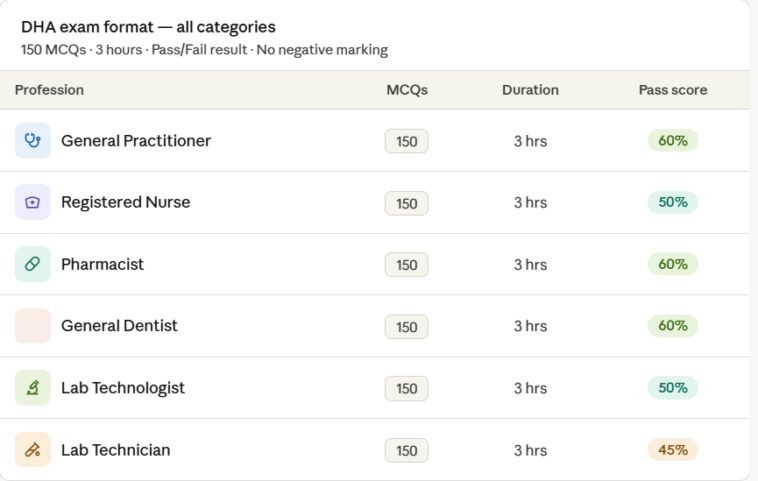
DHA Exam Format — All Categories
The DHA exam is a Computer-Based Test (CBT) conducted entirely in English with single-best-answer Multiple Choice Questions (MCQs).
DHA Exam Application Process
Step 1 — Check Eligibility Confirm your qualification and experience meet DHA requirements for your applied title.
Step 2 — Apply for Registration. Create an account on the official DHA Sheryan portal and submit your personal and professional details.
🎯 Unlock Free Mock Test
Enter your email and select your exam category.
Step 3 — Copy DHA Unique ID. Once registered, note your DHA Unique ID for all future correspondence.
Step 4 — Generate Eligibility ID. Submit required documents for DataFlow Primary Source Verification. On approval, an Eligibility ID is issued.
Step 5 — Schedule Exam Book your exam at any authorized Prometric center worldwide, including centers in India, the Philippines, Pakistan, Egypt, and more.
Step 6 — Sit the Exam & Receive Result. Complete the CBT. Results (Pass/Fail) will be updated in your Sheryan account.
DHA Exam Syllabus and Sample MCQs — All Categories
1. DHA Exam Syllabus for General Practitioner (Doctor)
General Practitioners (GPs) serve as the first point of contact for patients in Dubai’s rapidly growing primary healthcare system. Dubai offers GPs excellent career opportunities, including tax-free income, competitive salaries, and exposure to a highly diverse international patient population.
DHA Exam Pattern for Doctors
| Detail | Specification |
|---|---|
| Questions | 150 MCQs |
| Duration | 3 Hours |
| Exam Fee | USD 280 |
| Pass Score | 60% (90/150 correct) |
| Format | Single best answer, clinical scenario-based MCQs |
DHA Exam Syllabus for Doctors
The DHA exam syllabus for General Practitioners covers 12 major topics:
| # | Domain | Key Topics Covered |
|---|---|---|
| 1 | Chronic Diseases | Diabetes mellitus, hypertension, COPD, asthma, heart failure, CKD, thyroid disorders, dyslipidemia |
| 2 | Acute and/or Common Medical Problems | Acute infections, chest pain workup, dyspnea, fever evaluation, anemia, acute kidney injury |
| 3 | Common Pediatric Problems | Growth and development milestones, vaccinations, common infections, febrile seizures, failure to thrive |
| 4 | Women Health | Antenatal care, menstrual disorders, contraception methods, ectopic pregnancy, preeclampsia, cervical screening |
| 5 | Emergency Problems | Acute MI, stroke, anaphylaxis, trauma management, sepsis, respiratory failure |
| 6 | Common Surgical Problems | Appendicitis, hernia, bowel obstruction, wound care, post-operative complications |
| 7 | Common Psychiatric Problems | Depression, anxiety disorders, schizophrenia, substance use, suicide risk assessment |
| 8 | Common Eye and ENT Problems | Otitis media, tonsillitis, rhinitis, conjunctivitis, cataract, red eye, hearing loss |
| 9 | Common Derma Problems | Eczema, acne, psoriasis, fungal infections, scabies, skin rashes, wound infections |
| 10 | Basic Epidemiology and EBM Concepts | Study designs, bias types, sensitivity/specificity, NNT, screening programs, public health |
| 11 | Family Medicine Concepts | Doctor-patient relationship, continuity of care, preventive medicine, health promotion |
| 12 | Screening and Periodic Health Examination | Cancer screening guidelines, chronic disease monitoring, age-appropriate health checks |
High-Yield Topics for DHA Doctor Exam
Focus extra revision time on these frequently tested areas:
- Diabetes management — HbA1c targets, insulin regimens, diabetic foot, complications
- Hypertension — Choice of antihypertensives in special populations (CKD, pregnancy, heart failure)
- Obstetric emergencies — Preeclampsia, postpartum hemorrhage, ectopic pregnancy
- Pediatric vaccinations — UAE immunization schedule and contraindications
- Epidemiology calculations — Sensitivity, specificity, PPV, NPV, odds ratio vs relative risk
- Ethics in UAE practice — Informed consent, confidentiality, mandatory disease reporting
Official Reference Books (from DHA Guideline)
- Yingming A. Chen — Toronto Notes Canadian ED Edition
- Brian R. Walker — Davidson’s Principles and Practice of Medicine, 22nd Edition
- Kasper, Fauci et al. — Harrison’s Principles of Internal Medicine, 19th Edition
- Parveen Kumar, Michael Clark — Kumar and Clark’s Clinical Medicine, 9th Edition
- Hacker and Moore’s Essentials of Obstetrics and Gynecology
- DeCherney et al. — Current Diagnosis and Treatment: Obstetrics and Gynecology, 11th Edition
- Bernstein & Shelov — Pediatrics for Medical Students
- Marcdante & Kliegman — Nelson Essentials of Pediatrics, 7th Edition
DHA Sample MCQs for Doctors
Q1. A 45-year-old diabetic patient presents with a non-healing foot ulcer. The most important initial management step is:
- A) Start broad-spectrum antibiotics immediately
- B) Order MRI of the foot
- C) Perform wound debridement and culture the wound
- D) Schedule immediate surgical amputation
Answer: C Debridement and wound culture are essential to guide targeted therapy. Empiric antibiotics alone are insufficient without identifying the causative organism and its sensitivities.
Q2. A 6-month-old infant presents with high fever, bulging anterior fontanelle, and irritability. What is the most appropriate next step?
- A) Immediate lumbar puncture
- B) Start antipyretics and observe
- C) Administer oral antibiotics and discharge
- D) Request skull X-ray
Answer: A A bulging fontanelle with fever strongly suggests bacterial meningitis. Immediate lumbar puncture is critical for diagnosis before starting antibiotics.
Q3. A 30-year-old pregnant woman at 10 weeks gestation is diagnosed with a urinary tract infection. Which antibiotic is the safest choice?
- A) Ciprofloxacin
- B) Nitrofurantoin
- C) Trimethoprim-sulfamethoxazole
- D) Doxycycline
Answer: B Nitrofurantoin is safe in early pregnancy for uncomplicated UTIs. Fluoroquinolones and tetracyclines are avoided due to fetal toxicity risks.
Q4. A 58-year-old diabetic man presents with a foot ulcer exposing tendons, foul-smelling discharge, cellulitis, and gas in soft tissue on X-ray. Most urgent next step?
- A) Start IV antibiotics and schedule outpatient wound care
- B) Arrange immediate surgical consultation for debridement
- C) Order MRI to assess for osteomyelitis
- D) Culture the wound and await sensitivity results
Answer: B Gas in soft tissue indicates necrotizing fasciitis — a surgical emergency. Immediate debridement is life-saving; delay significantly worsens prognosis.
Q5. A 70-year-old man post hip replacement develops sudden dyspnea, tachycardia, and hypotension. Most likely diagnosis?
- A) Fat embolism syndrome
- B) Pulmonary embolism
- C) Myocardial infarction
- D) Pneumothorax
Answer: B Major orthopedic surgeries carry high VTE risk. Sudden post-operative respiratory distress with hemodynamic compromise strongly suggests pulmonary embolism.
Q6. Which epidemiological measure best quantifies the association between smoking and lung cancer in a case-control study?
- A) Relative Risk
- B) Odds Ratio
- C) Hazard Ratio
- D) Attributable Risk
Answer: B Case-control studies calculate the odds ratio. Relative risk is calculated from cohort studies. This is a very common exam trap — know your study designs.
🆓 Free DHA Mock Test for Doctors
Practice with free DHA-format MCQs before your exam: 👉 Free DHA Doctor Mock Test
DHA Doctor Exam Preparation Tips
- Master clinical scenarios — Most GP questions present a patient case; practice reading the stem fully before looking at options
- Know UAE-specific protocols — Informed consent laws, mandatory disease reporting, and DHA prescribing guidelines differ from other countries
- Time management — 3 hours for 150 questions = ~1.2 minutes per question; flag difficult ones and return
- Focus on primary care conditions — The exam tests GP-level knowledge, not subspecialty expertise
- Practice 4,000+ MCQs — Volume of MCQ practice is the strongest predictor of exam success
2. DHA Exam Syllabus for Nurses
The DHA nursing exam is mandatory for all registered nurses seeking to practice in Dubai. It evaluates theoretical knowledge, clinical judgment, patient safety, and ethical decision-making across the full scope of nursing practice. Dubai offers nurses competitive tax-free salaries, career advancement, and exposure to a diverse international patient population.
DHA Exam Pattern for Nurses
| Detail | Specification |
|---|---|
| Questions | 150 MCQs |
| Duration | 3 Hours |
| Exam Fee | USD 240 |
| Pass Score | 50% (75/150 correct) |
| Format | Single best answer, scenario-based MCQs |
📌 Note: Assistant Nurse pass score is 45%. Registered Midwife pass score is 45–50% depending on title.
DHA Exam Syllabus for Nurses
The DHA exam for Registered Nurses covers 4 major domains:
Domain 1: Unit Management and Leadership
| Sub-Topic | What to Study |
|---|---|
| Leadership styles | Transformational, transactional, autocratic, democratic nursing leadership |
| Delegation and supervision | Safe delegation principles, scope of practice for different nursing grades |
| Staffing and scheduling | Nurse-to-patient ratios, safe staffing principles, shift management |
| Quality improvement | Root cause analysis, incident reporting, near-miss systems |
| UAE healthcare regulations | DHA nursing standards, patient rights, mandatory reporting obligations |
| Conflict resolution | Managing staff disputes, grievance procedures, interdisciplinary communication |
| Ethical decision-making | ANA Code of Ethics application, professional accountability |
Domain 2: Fundamentals of Nursing
| Sub-Topic | What to Study |
|---|---|
| Vital signs | Normal ranges, abnormal findings, nursing interventions for deviations |
| Infection control | Standard precautions, hand hygiene, isolation categories, PPE use |
| Wound care | Wound assessment, dressing types, pressure ulcer staging (I–IV) |
| Patient safety | Fall prevention, medication safety, restraint use, patient identification protocols |
| Nutrition and elimination | Enteral feeding, NG tube care, bowel and bladder management |
| Drug administration | Rights of medication administration, routes, common drug calculations |
| Fluid and electrolytes | IV fluid types, electrolyte imbalances and nursing interventions |
| Ethical and legal aspects | Informed consent, confidentiality, advance directives, patient rights |
| Documentation | Accurate charting, SBAR communication tool, incident documentation |
Domain 3: Maternal–Child Nursing
| Sub-Topic | What to Study |
|---|---|
| Antenatal care | Prenatal assessments, high-risk pregnancy signs, fetal monitoring |
| Intrapartum care | Stages of labor, fetal heart rate patterns (early/late/variable decelerations) |
| Postpartum care | Uterine involution, lochia assessment, postpartum hemorrhage, postpartum depression |
| Newborn care | APGAR scoring, thermoregulation, breastfeeding support, neonatal jaundice |
| Pediatric nursing | Growth and developmental milestones, childhood immunizations, common illnesses |
| Pediatric emergencies | Febrile seizures, respiratory distress in children, dehydration management |
| Pediatric medication | Weight-based drug dosing, common pediatric formulations and calculations |
Domain 4: Adult Nursing
| Sub-Topic | What to Study |
|---|---|
| Cardiovascular | MI management, heart failure, arrhythmias, post-cardiac catheterization care |
| Respiratory | Asthma, COPD, pneumonia, oxygen therapy targets, mechanical ventilation basics |
| Endocrine | Diabetic ketoacidosis, hypoglycemia management, thyroid disorders |
| Neurological | Stroke recognition (FAST), seizure management, Glasgow Coma Scale, ICP monitoring |
| Renal | CKD, acute kidney injury, dialysis nursing care, fluid restriction |
| Gastrointestinal | Liver cirrhosis, GI bleeding, ostomy care, bowel management |
| Musculoskeletal | Post-orthopedic surgery care, cast care, compartment syndrome recognition |
| Oncology | Chemotherapy side effects, neutropenic precautions, palliative care principles |
| Mental health nursing | Depression, anxiety, schizophrenia, therapeutic communication, de-escalation |
| Perioperative care | Pre-operative checklist, intraoperative safety, post-anesthesia recovery |
| Critical care | Ventilator management basics, hemodynamic monitoring, ICU nursing priorities |
High-Yield Topics for DHA Nurse Exam
- Fetal heart rate patterns — early vs late vs variable decelerations (very commonly tested)
- Medication calculations — drip rates, weight-based dosing, unit conversions
- Post-operative complications — DVT, pulmonary embolism, wound dehiscence, atelectasis
- Pressure ulcer staging — Stages I–IV, unstageable, and deep tissue injury
- Electrolyte imbalances — Signs, ECG changes, and nursing interventions for each
- Unit Management scenarios — Delegation, prioritization, and ethical dilemmas
- COPD oxygen targets — 88–92% SpO2 to avoid hypercapnic respiratory failure
- UAE nursing regulations — Patient rights, scope of practice, mandatory incident reporting
Official Reference Books (from DHA Guideline)
- Leda M. McKenry et al. — Mosby’s Pharmacology in Nursing
- Berman & Snyder — Kozier and Erb’s Fundamentals of Nursing, Latest Edition
- Brunner & Suddarth’s Canadian Textbook of Medical-Surgical Nursing, Latest Edition
- Wong & Hockenberry — Wong’s Nursing Care of Infants and Children, Latest Edition
- Sole, Klein, Moseley — Introduction to Critical Care Nursing, Latest Edition
- Townsend — Essentials of Psychiatric Mental Health Nursing, Latest Edition
- ANA Code of Ethics, Latest Edition
DHA Sample MCQs for Nurses
Q1. A nurse is caring for a patient post-thyroidectomy. The most concerning finding is:
- A) Mild hoarseness
- B) Difficulty swallowing
- C) Positive Trousseau’s sign
- D) Slight neck swelling
Answer: C Positive Trousseau’s sign (carpal spasm on BP cuff inflation) indicates hypocalcemia — a life-threatening post-thyroidectomy complication requiring immediate calcium replacement.
Q2. During labor, a deceleration of fetal heart rate that mirrors uterine contractions most likely indicates:
- A) Umbilical cord prolapse
- B) Fetal head compression (early deceleration)
- C) Uteroplacental insufficiency
- D) Fetal hypoxia
Answer: B Early decelerations mirror contractions exactly and are caused by vagal response to head compression — benign, requiring no intervention. Late decelerations (after contraction peak) suggest uteroplacental insufficiency and are non-reassuring.
Q3. A nurse manager notices a rise in medication errors during night shifts. Most appropriate leadership intervention?
- A) Implement strict punitive measures
- B) Increase workload to improve efficiency
- C) Conduct root cause analysis and staff retraining
- D) Rotate night shift duties more frequently
Answer: C Effective nursing leadership addresses systemic causes of errors through root cause analysis, not individual punishment. This improves safety culture and prevents recurrence.
Q4. A patient with COPD is receiving oxygen therapy. Which SpO2 target is most appropriate?
- A) 98–100%
- B) 94–98%
- C) 88–92%
- D) 85–88%
Answer: C COPD patients with chronic hypercapnia rely partly on hypoxic drive. Target SpO2 of 88–92% prevents suppression of respiratory drive. High-flow oxygen can cause CO2 retention and respiratory failure.
Q5. A nurse is preparing to delegate wound dressing to a nursing assistant. Which delegation principle is most important?
- A) The task must be familiar to the nurse
- B) Delegation eliminates the nurse’s accountability
- C) The delegatee must have the competency to perform the task safely
- D) All nursing tasks can be delegated
Answer: C Safe delegation requires confirming the delegatee is trained and competent for the specific task. The nurse retains professional accountability even after delegating.
🆓 Free DHA Mock Test for Nurses
Practice with free DHA-format MCQs before your exam: 👉 Free DHA Nurse Mock Test
DHA Nurse Exam Preparation Tips
- Prioritize clinical scenario questions — Most questions ask for the “most appropriate” or “first” nursing action in a patient situation
- Use ABC + Maslow — Apply Airway-Breathing-Circulation and Maslow’s hierarchy to prioritize competing patient needs
- Learn UAE nursing standards — Patient rights, scope of practice, and mandatory reporting requirements are specifically tested
- Dedicate time to Unit Management — This domain catches many internationally trained nurses off guard
- Practice drug calculations daily — Expect multiple calculation-based questions on drip rates, weight-based dosing, and unit conversions
3. DHA Exam Syllabus for Pharmacists
Passing the DHA exam is mandatory for all pharmacists and clinical pharmacists to obtain a license and practice in Dubai. It opens doors to retail, hospital, and clinical pharmacy roles where pharmacists play a critical role in medication safety, patient counseling, and healthcare compliance.
DHA Exam Pattern for Pharmacists
| Detail | Specification |
|---|---|
| Questions | 150 MCQs |
| Duration | 3 Hours |
| Exam Fee | USD 240 |
| Pass Score | 60% (90/150 correct) |
| Format | Single best answer MCQs with clinical case scenarios |
DHA Exam Syllabus for Pharmacists
The DHA Prometric exam syllabus for Pharmacists covers 14 major topics (verified from official DHA CBT guideline):
| # | Domain | Key Topics Covered |
|---|---|---|
| 1 | Toxicology | Drug overdose, specific antidotes, poisoning management, occupational exposures |
| 2 | Medicinal Chemistry | Drug structure-activity relationships, chemical stability, drug design principles |
| 3 | Sterile and Nonsterile Compounding | Aseptic technique, compounding preparations, beyond-use dating, quality checks |
| 4 | Pharmaceutics / Biopharmaceutics | Dosage forms, drug release, bioavailability, formulation factors |
| 5 | Pharmacognosy and Dietary Supplements | Herbal medicines, plant-derived drugs, supplement interactions, safety |
| 6 | Pharmacy Calculation and Compounding | Dosage calculations, concentration/dilution, IV admixture calculations |
| 7 | Clinical Pharmacogenomics | Genetic variation in drug metabolism, personalized medicine, CYP enzyme polymorphisms |
| 8 | Infection Control | Antimicrobial stewardship, pharmacy’s role in infection prevention, antibiotic resistance |
| 9 | Pharmacokinetics | Absorption, distribution, metabolism, excretion, half-life, volume of distribution |
| 10 | Pharmaceutical Care and Disease State Management | Evidence-based drug therapy selection, therapeutic monitoring, patient assessment |
| 11 | Medication Safety | High-alert medications, LASA drugs, adverse drug reactions, error reporting |
| 12 | Over-the-Counter Medication | Self-care counseling, OTC product selection, drug-food interactions, patient triage |
| 13 | Pharmacy Law and Ethics | UAE drug regulations, controlled substance laws, professional liability, dispensing rules |
| 14 | Clinical Pharmacology and Therapeutic Decision Making | Rational drug selection, clinical guidelines, special population dosing, drug interactions |
High-Yield Topics for DHA Pharmacist Exam
- Antidotes — N-acetylcysteine (paracetamol), flumazenil (benzodiazepines), naloxone (opioids), atropine (organophosphates)
- Warfarin interactions — Drugs that increase/decrease INR, monitoring parameters, reversal agents
- High-alert medications — Insulin, heparin, concentrated potassium chloride, chemotherapy agents
- Pharmacokinetics calculations — Half-life, clearance, loading vs maintenance dose, volume of distribution
- CYP450 enzymes — Major inhibitors and inducers and their clinical drug interaction consequences
- UAE pharmacy law — Controlled drug schedules, prescription requirements, dispensing without prescription rules
- Antimicrobial selection — Spectrum of activity, resistance patterns, empiric vs targeted therapy
Official Reference Books (from DHA Guideline)
- Gourley & Eoff — The APhA Complete Review for Pharmacy
- Goodman & Gilman’s: The Pharmacological Basis of Therapeutics
- Shargel et al. — Comprehensive Pharmacy Review
- Shargel — Applied Biopharmaceutics & Pharmacokinetics
- Ansel & Stoklosa — Pharmaceutical Calculations
- Aulton — Pharmaceutics: The Science of Dosage Form Design
- Stine & Brown — Principles of Toxicology
DHA Sample MCQs for Pharmacists
Q1. A drug has a half-life of 8 hours. How long will it take for 93.75% of the drug to be eliminated?
- A) 16 hours
- B) 24 hours
- C) 32 hours
- D) 40 hours
Answer: C After each half-life: 50% → 75% → 87.5% → 93.75% eliminated. That is 4 half-lives × 8 hours = 32 hours. Mastering % eliminated per half-life is essential for the pharmacist exam.
Q2. Which OTC medication is contraindicated in a patient taking warfarin?
- A) Paracetamol
- B) Loratadine
- C) Ibuprofen
- D) Omeprazole
Answer: C NSAIDs like ibuprofen inhibit platelet aggregation AND displace warfarin from protein binding, significantly increasing bleeding risk. Paracetamol at recommended doses is the safer analgesic choice.
Q3. A pregnant woman in her first trimester seeks advice for nausea. The safest pharmacologic option is:
- A) Ondansetron
- B) Promethazine
- C) Doxylamine with pyridoxine
- D) Metoclopramide
Answer: C Doxylamine + pyridoxine (Vitamin B6) is the first-line recommended pharmacotherapy for pregnancy-related nausea and vomiting with the strongest safety evidence in the first trimester.
Q4. A patient on lithium therapy presents with tremors, confusion, and polyuria. Serum lithium is 2.1 mEq/L. Immediate action?
- A) Reduce the lithium dose by half
- B) Add a mood stabilizer and monitor
- C) Discontinue lithium and initiate supportive care
- D) Administer sodium bicarbonate IV
Answer: C Lithium toxicity occurs above 1.5 mEq/L. Levels above 2.0 mEq/L are severe toxicity — requires immediate discontinuation, IV hydration, and close monitoring. Hemodialysis may be needed.
Q5. Which of the following is a high-alert medication requiring extra verification before dispensing?
- A) Paracetamol 500mg tablet
- B) Amoxicillin 500mg capsule
- C) Concentrated potassium chloride injection
- D) Omeprazole 20mg capsule
Answer: C Concentrated electrolyte solutions (particularly KCl) are on the ISMP high-alert list. Inadvertent undiluted administration can cause fatal cardiac arrhythmias.
🆓 Free DHA Mock Test for Pharmacists
Practice with free DHA-format MCQs before your exam: 👉 Free DHA Pharmacist Mock Test
DHA Pharmacist Exam Preparation Tips
- Master UAE pharmacy law — UAE-specific controlled drug regulations frequently trip up internationally trained pharmacists
- Study pharmacokinetics calculations daily — Half-life, clearance, loading dose problems appear consistently
- Know your antidotes cold — Toxicology is a dedicated domain; every major drug-antidote pair is fair game
- Learn CYP450 interactions — Clinical pharmacogenomics and pharmacology questions test enzyme inhibitors/inducers
- Use clinical case-based resources — DHA pharmacist questions are increasingly scenario-based, testing therapeutic decision-making not just drug facts
4. DHA Exam Syllabus for Lab Technician (MLT)
The DHA exam for Medical Lab professionals is mandatory to obtain a license to work in Dubai’s healthcare sector. There are two separate titles with different exams: Medical Laboratory Technologist (higher grade) and Medical Laboratory Technician.
DHA Exam Pattern
| Title | Questions | Duration | Fee | Pass Score |
|---|---|---|---|---|
| Medical Laboratory Technologist | 150 MCQs | 3 Hours | USD 240 | 50% |
| Medical Laboratory Technician | 150 MCQs | 3 Hours | USD 240 | 45% |
DHA Exam Syllabus for Medical Laboratory Technologist
| # | Domain | Key Topics Covered |
|---|---|---|
| 1 | Blood Bank | ABO/Rh typing, crossmatching, Coombs test, blood component therapy, transfusion reactions |
| 2 | Urinalysis and Other Body Fluids | Dipstick interpretation, microscopic analysis, CSF, pleural/synovial fluid analysis |
| 3 | Clinical Chemistry | Liver function, renal function, lipid panel, glucose metabolism, enzyme assays, electrolytes |
| 4 | Hematology | CBC interpretation, peripheral blood smear, WBC differential, platelet disorders, anemia types |
| 5 | Immunology and Serology | Antigen-antibody reactions, ELISA, immunofluorescence, autoimmune markers, serology techniques |
| 6 | Histo- and Cyto Techniques | Tissue processing, staining methods (H&E, special stains), cytology preparation |
| 7 | Microbiology | Culture techniques, Gram staining, antibiotic sensitivity, common pathogens, identification |
| 8 | Laboratory Operation | QC principles, Westgard rules, lab safety, accreditation standards, pre-analytical errors |
| 9 | Patient Safety and Professionalism | Sample handling, patient identification, laboratory ethics, error reporting |
DHA Exam Syllabus for Medical Laboratory Technician
| # | Domain | Key Topics Covered |
|---|---|---|
| 1 | Safety and Quality Control | Lab safety protocols, Westgard rules, Levey-Jennings charts, QC failure identification |
| 2 | Bacteriology | Gram staining, culture media, common bacterial pathogens, antibiotic sensitivity |
| 3 | Virology | Common viral infections, serological markers, PCR principles |
| 4 | Immunology | Antibody-antigen reactions, ELISA, complement system, autoimmune markers |
| 5 | Parasitology | Malaria diagnosis, stool O&P examination, common parasites in Gulf region, life cycles |
| 6 | Hematology | CBC interpretation, blood smear, anemia classification, platelet disorders |
| 7 | Blood Bank | ABO/Rh typing, crossmatching, Coombs test, transfusion reactions |
| 8 | Biochemistry | Liver function, renal function, lipid panel, glucose, enzyme assays |
| 9 | Hormones | Thyroid function tests, adrenal hormones, reproductive hormones, HbA1c |
| 10 | Urinalysis | Dipstick interpretation, microscopic analysis, urine culture |
| 11 | Mycology | Common fungal pathogens, KOH preparation, culture identification |
High-Yield Topics for DHA Lab Exam
- Westgard rules — Know all rules: 1₂s warning, 1₃s rejection, 2₂s, R₄s, 4₁s, 10x
- Blood bank — ABO compatibility, Rh factor, Coombs test interpretation, transfusion reaction types
- Anemia differentiation — Iron deficiency vs B12/folate vs hemolytic: MCV, MCHC, reticulocyte count patterns
- CSF analysis — Bacterial vs viral meningitis: cell count, glucose, protein patterns
- Malaria diagnosis — Thick vs thin smear, species differentiation, rapid diagnostic tests
- Liver function test patterns — Hepatocellular vs cholestatic injury
Official Reference Books (from DHA Guideline)
For MLT Technologist:
- Harmening — Modern Blood Banking & Transfusion Practices, 6th Ed.
- Brunzel — Fundamentals of Urine and Body Fluid Analysis, 4th Ed.
- Marshall et al. — Clinical Chemistry, 8th Ed.
- Keohane et al. — Rodak’s Hematology, 5th Ed.
- Todd et al. — Lecture Notes: Immunology, 7th Ed.
- Tille — Bailey & Scott’s Diagnostic Microbiology, 13th Ed.
For MLT Technician:
- Cheesbrough — Laboratory Practice in Tropical Countries, Latest Ed.
- Gunatillaka — Manual on Standard Operating Procedures for Clinical Chemistry
DHA Sample MCQs for Lab Technicians
Q1. A positive Coombs’ test in a patient indicates:
- A) Vitamin B12 deficiency anemia
- B) Hemolytic anemia
- C) Iron deficiency anemia
- D) Aplastic anemia
Answer: B The Coombs (antiglobulin) test detects antibodies or complement on red blood cells, indicating immune-mediated hemolysis. Direct Coombs detects antibodies on patient’s own RBCs; indirect Coombs detects antibodies in serum.
Q2. In a quality control program, an out-of-control situation is indicated when:
- A) Two consecutive points fall outside ±2 SD limits
- B) One point exceeds ±3 SD limits
- C) Ten consecutive points fall on one side of the mean
- D) All of the above
Answer: D All three are Westgard multirule violations indicating QC failure. The 1₃s rule detects random error; the 2₂s and 10x rules detect systematic error. Understanding all Westgard rules is essential for the lab exam.
Q3. Which finding best distinguishes bacterial from viral meningitis on CSF analysis?
- A) Elevated glucose
- B) High neutrophil count
- C) Elevated protein
- D) High lymphocyte count
Answer: B Bacterial meningitis produces neutrophilic pleocytosis, low CSF glucose (<45 mg/dL), and elevated protein. Viral meningitis shows lymphocytic predominance with near-normal glucose — a critical distinction.
🆓 Free DHA Mock Test for Lab Technicians
Practice with free DHA-format MCQs before your exam: 👉 Free DHA Lab Technician Mock Test
DHA Lab Exam Preparation Tips
- Master Westgard rules completely — QC concepts appear in almost every lab exam; know every rule and what error type it detects
- Practice blood bank scenarios — Transfusion reaction identification and management is heavily tested
- Know normal reference ranges — Many questions ask you to identify an abnormal result
- Study pre-analytical errors — Hemolysis, lipemia, improper tube selection and their effect on test results
- Review UAE lab safety standards — Accreditation and safety requirements specific to Dubai’s healthcare system
5. DHA Exam Syllabus for Dentists
The DHA exam for dentists evaluates clinical knowledge, surgical competency, ethical practice, and patient management. General Dentistry is the most common DHA dental category.
DHA Exam Pattern for General Dentists
| Detail | Specification |
|---|---|
| Questions | 150 MCQs |
| Duration | 3 Hours |
| Exam Fee | USD 280 |
| Pass Score | 60% (90/150 correct) |
| Note | Certain Consultant-level titles require oral assessment instead of CBT |
DHA Exam Syllabus for General Dentists
The DHA Prometric exam syllabus for General Dentists covers 12 domains:
| # | Domain | Key Topics Covered |
|---|---|---|
| 1 | Anesthesia and Pain Management | Local anesthesia agents, techniques, max doses, systemic complications, LA allergy |
| 2 | Oral Medicine / Oral Surgery | Oral mucosal diseases, extractions, surgical complications, dry socket, biopsy |
| 3 | Periodontics | Periodontal disease classification, scaling, root planing, surgical periodontics |
| 4 | Temporomandibular Joint | TMD classification, diagnostic criteria, conservative management, occlusal splints |
| 5 | Endodontics | Pulp pathology, RCT indications, access cavity preparation, obturation, failure management |
| 6 | Implant Surgery | Implant types, osseointegration, peri-implantitis vs peri-implant mucositis, complications |
| 7 | Restorative Dentistry | Direct/indirect restorations, material selection, crown preparation, dental caries management |
| 8 | Orthodontics / Pediatric Dentistry | Malocclusion classification, space management, growth considerations, pediatric pulp therapy |
| 9 | Cosmetic Dentistry | Bleaching protocols, veneers, composite bonding, smile design, shade selection |
| 10 | Deformities and Orthognathic Surgery | Facial skeletal deformities, Le Fort fractures (I, II, III), surgical-orthodontic planning |
| 11 | Patient Education | Oral hygiene instruction, preventive dentistry, fluoride therapy, dietary counseling |
| 12 | Ethics | Informed consent (voluntary, informed, documented), confidentiality, UAE dental regulations |
High-Yield Topics for DHA Dentist Exam
- Le Fort fractures — Classification (I, II, III) and specific clinical presentations
- Peri-implantitis vs mucositis — Bone loss is the key distinguishing feature
- Local anesthesia — Maximum doses, toxicity signs, management of overdose
- Dry socket — Risk factors, clinical features (3–5 days post-extraction), management
- Informed consent — Must be voluntary, fully informed, documented, and an ongoing process
- Periodontal disease classification — 2017 AAP/EFP classification system
Official Reference Books (from DHA Guideline)
- Neville et al. — Oral and Maxillofacial Pathology, 4th Ed.
- Lang & Lindhe — Clinical Periodontology and Implant Dentistry, 6th Ed.
- Dean — McDonald and Avery’s Dentistry for the Child and Adolescent, 10th Ed.
- Sturdevant’s Art and Science of Operative Dentistry, 5th Ed.
- Malamed — Medical Emergencies in the Dental Office, Latest Ed.
- Cohen & Hargreaves — Pathways of the Pulp, 11th Ed.
- Malamed — Handbook of Local Anesthesia, 6th Ed.
DHA Sample MCQs for Dentists
Q1. A patient suffers midface trauma with “raccoon eyes” and CSF rhinorrhea. Which fracture is most likely?
- A) Mandibular fracture
- B) Le Fort I fracture
- C) Le Fort II fracture
- D) Zygomatic arch fracture
Answer: C Le Fort II (pyramidal) fracture involves the midface and skull base, causing CSF rhinorrhea from a dural tear and bilateral periorbital ecchymosis (raccoon eyes). Le Fort III involves complete craniofacial separation.
Q2. A 55-year-old male with an implant placed 3 months ago presents with peri-implant bone loss and suppuration. Most likely diagnosis?
- A) Peri-implantitis
- B) Mechanical overload
- C) Normal bone remodeling
- D) Mucosal hyperplasia
Answer: A Peri-implantitis is defined by inflammation AND progressive bone loss around an implant. Peri-implant mucositis involves only soft tissue inflammation without bone loss — an earlier, reversible stage.
Q3. According to dental ethics, informed consent should be:
- A) Obtained verbally after treatment
- B) Only necessary for surgical procedures
- C) A continuous process involving patient understanding and voluntary agreement
- D) Waived if treatment is low-risk
Answer: C Informed consent must be voluntary (no coercion), fully informed (patient understands risks, benefits, and alternatives), documented, and an ongoing process — not a one-time signature.
🆓 Free DHA Mock Test for Dentists
Practice with free DHA-format MCQs before your exam: 👉 Free DHA Dentist Mock Test
DHA Dentist Exam Preparation Tips
- Prioritize oral medicine and surgery — This domain accounts for a large portion of the paper
- Study implant complications thoroughly — Peri-implantitis vs peri-implant mucositis is commonly tested
- Know Le Fort fracture classifications cold — Trauma questions appear regularly
- Review UAE dental ethics — Patient rights, documentation requirements, and professional conduct standards
- Practice with clinical scenario questions — Questions often describe findings and ask for diagnosis or management
DHA vs DOH vs MOH — Key Differences
Many candidates ask which Gulf licensing exam they need. Here’s a quick comparison:
| Authority | Full Name | Jurisdiction | Notes |
|---|---|---|---|
| DHA | Dubai Health Authority | Dubai emirate only | CBT via Prometric; focus of this guide |
| DOH | Department of Health | Abu Dhabi emirate | Previously called HAAD; different exam format |
| MOH | Ministry of Health | All other UAE emirates | Covers Sharjah, Ajman, Ras Al Khaimah, Fujairah |
If you plan to work specifically in Dubai, you need the DHA license. Under the UAE’s unified licensing policy, licenses may be convertible between emirates with proper documentation.
General DHA Exam Preparation Tips
Study Approach
- Use DHA-specific question banks — Generic medical MCQs are insufficient; practice with questions formatted to match actual DHA difficulty and style
- Study official reference books — Each profession has DHA-recommended textbooks listed above; prioritize these over generic resources
- Practice with timed mock exams — Simulate real exam conditions at least 4 weeks before your exam date
Time Management
- Build a structured study schedule — Divide all syllabus domains into weekly targets
- Prioritize your weakest areas — Identify knowledge gaps early and dedicate extra time to them
- Practice under exam conditions — 150 questions in 3 hours = 1.2 minutes per question maximum
Exam Day Strategy
- Arrive at the Prometric center at least 30 minutes early with valid photo ID
- Use the flag-and-review feature for uncertain questions
- Attempt every question — No negative marking means a blank is always worse than a guess
- On clinical scenario questions, trust your first instinct unless you clearly identify a reasoning error
Frequently Asked Questions (FAQs)
Q: What is the passing score for the DHA nurse exam? The passing score for the Registered Nurse DHA exam is 50%, meaning 75 out of 150 questions must be answered correctly. The Assistant Nurse passing score is 45%.
Q: What is the passing score for the DHA doctor (GP) exam? The passing score for the General Practice DHA exam is 60%, requiring at least 90 correct answers out of 150 questions.
Q: How many questions are in the DHA pharmacist exam? The DHA pharmacist exam consists of 150 MCQs to be completed in 3 hours, with a 60% passing score (90/150 correct).
Q: What is the DHA exam fee for doctors? The official DHA exam fee for General Practitioners is USD 280, paid through the Prometric scheduling system.
Q: What is the DHA exam fee for nurses? The official DHA exam fee for Registered Nurses is USD 240.
Q: How many questions are in the DHA lab technician exam? Both the Medical Laboratory Technologist and Medical Laboratory Technician exams consist of 150 MCQs in 3 hours. The Technologist passing score is 50%; the Technician passing score is 45%.
Q: Is the DHA exam tough to pass? With targeted preparation using the correct syllabus and DHA-format MCQ practice, most candidates pass in 1–2 attempts. Using the right study resources aligned to the official DHA blueprint is the key differentiator.
Q: Can I apply from India, Pakistan, or the Philippines? Yes. Prometric conducts DHA exams at centers in India, Pakistan, Philippines, Egypt, and 160+ countries. You do not need to travel to Dubai to sit the exam.
Q: How many attempts are allowed for the DHA exam? A maximum of 3 attempts are permitted. After 3 failures, additional requirements from DHA apply before retaking.
Q: Is there negative marking in the DHA exam? No. There is no negative marking. Always attempt every question — a blank answer is always worse than an educated guess.
Q: What is the validity of a DHA exam result? Your DHA exam Pass result and the eligibility letter issued after document verification remain valid while you seek employment in Dubai. Check the Sheryan portal for current validity periods.
Q: What subjects are in the DHA exam for nurses? The DHA nurse exam covers 4 domains: Unit Management & Leadership, Fundamentals of Nursing, Maternal–Child Nursing, and Adult Nursing — all tested through clinical scenario MCQs.
Q: What is the difference between DHA Medical Laboratory Technologist and Technician? These are two separate titles with different exams. The Technologist exam covers Blood Bank, Clinical Chemistry, Hematology, Immunology/Serology, Histo/Cyto Techniques, Microbiology, Lab Operations, and Patient Safety. The Technician exam covers Safety/QC, Bacteriology, Virology, Immunology, Parasitology, Hematology, Blood Bank, Biochemistry, Hormones, Urinalysis, and Mycology. Both have 150 MCQs; Technologist needs 50% to pass, Technician needs 45%.