
For General Practitioners seeking Gulf licensure, the Prometric and Pearson VUE exam syllabus is the most important document to study before anything else. Whether you are applying for the DHA exam in Dubai, OMSB in Oman, or QCHP in Qatar, each licensing authority sets its own syllabus, exam pattern, and passing standard. To practice medicine in any Gulf country, you must obtain a medical license — and that starts with passing the right exam for the right authority.
The syllabus, topic weightage, and passing criteria differ across DHA, OMSB, and QCHP. If you’re applying through SCFHS in Saudi Arabia, note that it does not offer a separate General Practitioner category — candidates there must apply under a specialty exam instead.
Preparing without first knowing the exact exam syllabus and pattern is one of the most common — and costly — mistakes General Practitioners make when applying for Gulf licensure. To work in any Gulf country, completing DataFlow PSV verification is just as mandatory as passing the licensing exam itself. Before booking your exam or purchasing study materials, you need to know exactly what your target authority tests and how it is structured.
This guide covers the complete Prometric and Pearson VUE exam syllabus for General Practitioners across DHA, OMSB, and QCHP — plus what SCFHS candidates need to know instead. Syllabus breakdown, exam pattern, number of questions, time limits, passing scores, and preparation tips — everything you need to build a focused study plan and walk into your exam fully prepared.
Exam style and difficulty also vary by authority: DHA questions are typically short, moderate-difficulty case scenarios with a single clear diagnosis or next step. OMSB vignettes tend to require a bit more clinical reasoning, and QCHP (Qatar) is generally the most challenging of the three, often requiring you to weigh two or more plausible diagnoses before selecting the best answer. Exam syllabus with sample MCQs for each authority is included in their respective sections below.
DHA Exam Syllabus and Pattern for General Practitioners
The DHA (Dubai Health Authority) exam is a mandatory assessment for General Practitioners seeking to practice in Dubai. It evaluates whether candidates meet the required standard of medical knowledge and clinical skills.
The DHA exam syllabus for General Practitioners is divided into 12 major topics:
- Chronic Diseases
- Acute and/or Common Medical Problems
- Common Pediatric Problems
- Women Health
- Emergency Problems
- Common Surgical Problems
- Common Psychiatric Problems
- Common Eye and ENT Problems
- Common Derma Problems
- Basic Epidemiology and EBM Concepts
- Family Medicine Concepts
- Screening and Periodic Health Examination
DHA Exam Pattern: It consists of 150 MCQs with a time limit of 3 hrs.
Passing Score: 60%
Eligibility: Bachelor’s degree in Medicine (or equivalent) from an accredited institution, with successful completion of the internship program and 2 years of clinical experience
🎯 Unlock Free Mock Test
Enter your email and select your exam category.
Number of Attempts: The applicant is granted a total of three (3) attempts to pass the assessment
Enroll Now: Practice Test for GP (DHA, OMSB, MOH, SCFHS, etc.)
DHA Sample Questions — General Practitioner
1. (Emergency Problems)
A 45-year-old man presents with sudden onset of crushing central chest pain radiating to the left arm, associated with sweating and nausea. He looks pale and distressed.
What is the most likely diagnosis?
a. Gastroesophageal reflux
b. Acute coronary syndrome
c. Musculoskeletal chest pain
d. Panic attack
Answer: B
Crushing central chest pain with radiation, diaphoresis, and nausea is the classic presentation of acute coronary syndrome and should be treated as a medical emergency until ruled out.
2. (Common Pediatric Problems)
A 4-year-old boy is brought in with a barking cough, hoarse voice, and stridor at rest, which started after a day of mild cold symptoms. He is alert but visibly working to breathe.
What is the most likely diagnosis?
a. Croup
b. Bronchiolitis
c. Foreign body aspiration
d. Pneumonia
Answer: A
A barking cough with stridor and hoarseness following a viral prodrome is the classic presentation of croup (laryngotracheobronchitis).
3. (Common Surgical Problems)
A 22-year-old man presents with pain that started around the umbilicus and has now localized to the right lower abdomen, with associated nausea and low-grade fever. On examination, there is tenderness at McBurney’s point.
What is the most likely diagnosis?
a. Renal colic
b. Acute appendicitis
c. Gastroenteritis
d. Inguinal hernia
Answer: B
Periumbilical pain migrating to the right iliac fossa with tenderness at McBurney’s point is the classic presentation of acute appendicitis.
4. (Women’s Health)
A 28-year-old woman presents with lower abdominal pain and a positive urine pregnancy test. She reports light vaginal spotting and her last menstrual period was 7 weeks ago.
What is the most important diagnosis to exclude first?
a. Ovarian cyst
b. Ectopic pregnancy
c. Urinary tract infection
d. Miscarriage
Answer: B
In any pregnant woman presenting with abdominal pain and bleeding, ectopic pregnancy must be excluded first, as it is potentially life-threatening.
5. (Common Eye and ENT Problems)
A 60-year-old man presents with sudden, painless loss of vision in one eye, describing it as “a curtain coming down.” He has a history of atrial fibrillation.
What is the most likely diagnosis?
a. Acute angle-closure glaucoma
b. Central retinal artery occlusion
c. Vitreous hemorrhage
d. Optic neuritis
Answer: B
Sudden, painless, curtain-like vision loss in a patient with a cardioembolic risk factor (AF) is classic for central retinal artery occlusion — an ophthalmic emergency.
Download Now: 5000 MCQs For General Practitioners(PDF)- (DHA, OMSB, MOH, SCFHS, etc.)
OMSB Exam Syllabus and Pattern for General Practitioners
The Oman Medical Specialty Board (OMSB) exam is a crucial requirement for General Practitioners aiming to practice in Oman. The Omani Examination for General Practitioners (OEGP) tests graduates on their ability to think critically and make decisions to correctly diagnose and treat medical conditions. It assesses their use of diagnostic tools, medications, prevention methods, and referrals.
Syllabus: The examination covers six (6) domains designed to measure the competencies of a general practitioner: women’s health, child health, medicine, public/community health, surgery, and emergency. Sections with topics and relative percentages are below:
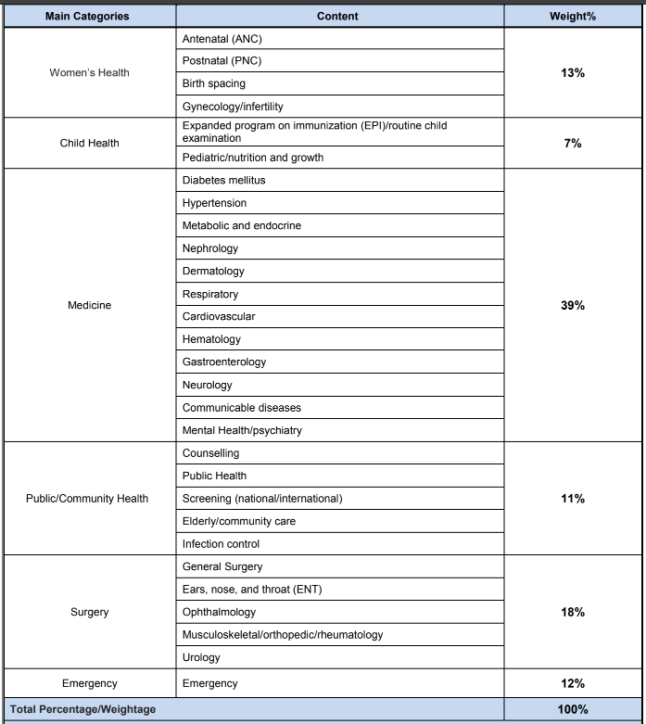
Note: As of April 2023, Oman has ended its association with Prometric. Candidates can now schedule their exams through Pearson VUE.
Exam Pattern: It consists of 150 MCQs with a time duration of 2 hours and 45 minutes.
Eligibility: Bachelor’s degree in Medicine (or equivalent) from an accredited institution, and completion of an approved/accredited internship program.
Number of Attempts: The applicant is granted a total of three (3) attempts to pass the assessment
Passing Score: 65%
Enroll Now: Practice Test for Doctors (DHA, OMSB, MOH, SCFHS, etc.)
OMSB Sample Questions — General Practitioner (Oman-style, original)
1. A 6-year-old boy presents with a two-day history of fever and refusal to walk. On examination, he holds his right hip flexed, abducted, and externally rotated, and cries on attempted movement. He looks well otherwise, with no rash.
Temperature 38.9°C, pulse 118/min.
What is the most appropriate next step?
a. Reassure and review in 1 week
b. Start oral antibiotics and discharge
c. Refer urgently for joint aspiration and further assessment
d. X-ray hip and discharge if normal
Answer: C
Fever with acute hip pain and a held, guarded position in a child raises concern for septic arthritis, which requires urgent same-day assessment and joint aspiration — this cannot be safely managed with reassurance or oral antibiotics alone.
2. A 40-year-old woman presents with progressive fatigue, cold intolerance, and weight gain over several months. She reports no chest pain or palpitations.
Examination: pulse 58/min, dry skin, delayed relaxation of ankle reflexes.
What is the most appropriate next investigation?
a. Chest X-ray
b. Fasting blood glucose
c. Thyroid function tests
d. Full blood count
Answer: C
The combination of fatigue, cold intolerance, weight gain, bradycardia, and delayed reflexes is a classic hypothyroid picture — thyroid function tests are the appropriate next step.
3. A 55-year-old man with known hypertension presents with sudden onset of the “worst headache of his life,” associated with neck stiffness and photophobia. He has no focal weakness.
What is the most likely diagnosis?
a. Migraine
b. Subarachnoid hemorrhage
c. Tension headache
d. Cluster headache
Answer: B
A sudden, severe “thunderclap” headache with meningism in this age group is a classic presentation of subarachnoid hemorrhage and requires urgent emergency assessment.
4. A 68-year-old man presents with progressive difficulty starting urination, weak stream, and waking twice at night to urinate over the past six months. Digital rectal exam shows a smoothly enlarged prostate.
What is the most likely diagnosis?
a. Acute prostatitis
b. Benign prostatic hyperplasia
c. Prostate cancer
d. Urethral stricture
Answer: B
Gradual onset of obstructive urinary symptoms with a smooth, uniformly enlarged prostate on exam is typical of benign prostatic hyperplasia, in contrast to the firm, irregular gland more suggestive of malignancy.
5. A 3-year-old girl is brought in for a routine well-child visit. On examination, the mother mentions the child has not yet started forming two-word phrases and points at objects instead of naming them.
What is the most appropriate next step?
a. Reassure — this is normal for age
b. Refer for hearing and developmental assessment
c. Refer directly to a psychiatrist
d. Start speech therapy without further assessment
Answer: B
Absent two-word phrases by 2–3 years is a red flag for speech delay. Hearing loss is a common and correctable cause, so hearing assessment alongside developmental evaluation is the appropriate first step, before assuming a specific diagnosis.
Download Now: 5000 MCQs For General Practitioners(PDF)- (DHA, OMSB, MOH, SCFHS, etc.)
DHP (Qatar) Exam Syllabus and Pattern for General Practitioners
Syllabus: The Qatar Prometric Exam (DHP) for General Practitioners is a standardized assessment designed to evaluate the knowledge and competency of medical professionals seeking to practice as General Practitioners in the State of Qatar. The Qatar Prometric exam syllabus is divided into four major sections as follows:
- Medicine
- Obstetrics and Gynecology
- Pediatrics
- Surgery
Enroll Now: Free Prometric Practice Test for Doctors
Medicine:
There are a total of 47 questions in the medicine section, covering about 30% of the syllabus, making it the most important topic. The curriculum is very broad, requiring thorough study. Mastery of this section is crucial for passing the exam.
Major Topics:
- Cardiology
- Pulmonary
- Endocrine
- Gastroenterology and Hepatology
- Nephrology
- Infectious Diseases (ID)
- Hematology
- Rheumatology
Obstetrics and Gynecology:
This section has 36 MCQs and covers around 25% of the syllabus. Unlike medicine, it has a narrower curriculum. Proper strategy and practice can help you score well.
Major Topics:
- Maternal-fetal Physiology
- Preconception Care
- Antepartum Care
- Intrapartum Care
- Immediate Care of the Newborn
- Postpartum Care
- Postpartum Infection
- Abnormal Labor
- Gynecological Procedures
- Medical and Surgical Complications of Pregnancy
Pediatrics:
This section consists of 37 MCQs and covers 25% of the syllabus. Most questions focus on General Pediatrics and Ambulatory Care.
Surgery:
This section includes 30 MCQs, covering 20% of the syllabus, and features common surgery questions.
Exam Pattern: It consists of 150 MCQs with a time limit of 3.5 Hours
Eligibility Criteria:
- Possess a minimum of six (6) years of an undergraduate degree (MBChB/MBBS/MBBCh/Northern American MD or equivalent).
- The internship program may count towards completing the required undergraduate study years if the medical college program is less than six (6) years.
- Overseas practitioners in this category must have at least five years of experience.
Number of Attempts: You have a maximum of 5 attempts to qualify for the exam.
Passing Score: 60%
QCHP Sample Questions — General Practitioner (Qatar-style)
1. A 6-month-old infant is brought in with poor weight gain since birth despite adequate feeding, recurrent chest infections, and greasy, foul-smelling stools. Examination shows a thin infant with mild abdominal distension.
What is the most likely diagnosis?
a. Cow’s milk protein allergy
b. Cystic fibrosis
c. Gastroenteritis
d. Lactose intolerance
Answer: B
The triad of failure to thrive, recurrent respiratory infections, and steatorrhea (fatty, foul-smelling stools) from birth is classic for cystic fibrosis, reflecting both pancreatic insufficiency and chronic lung involvement.
2. A 30-year-old woman at 32 weeks gestation presents with a severe headache, visual disturbance, and epigastric pain. Blood pressure is 160/105 mmHg, and urine dipstick shows 2+ protein.
What is the most appropriate immediate action?
a. Reassure and review in the next antenatal visit
b. Prescribe paracetamol and discharge
c. Refer urgently for obstetric assessment
d. Advise bed rest at home and recheck BP in one week
Answer: C
Severe hypertension with proteinuria, headache, visual disturbance, and epigastric pain in pregnancy indicates severe pre-eclampsia — a potentially life-threatening condition requiring urgent obstetric referral, not outpatient management.
3. A 55-year-old man with type 2 diabetes presents with a non-healing ulcer on the sole of his foot that he only noticed when his wife pointed it out. He reports no pain at the site. Examination shows reduced sensation to light touch and diminished pedal pulses.
What underlying process most likely explains why the ulcer went unnoticed?
a. Charcot joint
b. Osteomyelitis
c. Peripheral neuropathy
d. Venous insufficiency
Answer: C
Painless ulceration in a diabetic patient with reduced sensation points to peripheral neuropathy — loss of protective sensation allows injury and ulceration to go unnoticed until advanced.
4. A 24-year-old woman presents with palpitations, weight loss despite a good appetite, heat intolerance, and tremor over the past 2 months. Examination shows a diffusely enlarged, non-tender thyroid and a resting pulse of 112/min.
Which additional finding, if present, would most specifically support the most likely diagnosis over other causes of these symptoms?
a. Bilateral ankle edema
b. Exophthalmos
c. Hoarseness of voice
d. Lymphadenopathy
Answer: B
The clinical picture suggests hyperthyroidism, and exophthalmos (eye protrusion) is a specific extrathyroidal feature of Graves’ disease in particular, distinguishing it from other causes of thyrotoxicosis such as toxic nodules.
5. A 3-year-old boy is brought in after his mother noticed him limping for two days, with no history of trauma or fever. He is otherwise well, active, and afebrile. Examination shows mild restriction of hip internal rotation but no warmth or swelling.
What is the most appropriate next step?
a. Immediate surgical referral
b. Reassure and observe, as this is likely transient synovitis
c. Refer urgently for joint aspiration
d. Start empirical oral antibiotics
Answer: B
An afebrile, well child with atraumatic limp and mild hip restriction but no signs of infection (no fever, warmth, or marked swelling) is most consistent with transient synovitis, a self-limiting condition, unlike the more urgent picture in septic arthritis.
Download Now: 5000 MCQs For General Practitioners(PDF)- DHA & other Exams
How to Schedule the Prometric and Pearson VUE Exam?
The Pearson/Prometric exam refers to tests administered by two different testing organizations: Pearson VUE and Prometric. These organizations provide a wide range of exams across various industries, including healthcare, IT certifications, academic assessments, and professional licensure. Understanding the process of scheduling these exams is essential for successful exam seat booking.
Key considerations before scheduling your exam:
- The Oman Medical Specialty Board (OMSB) conducts exams for healthcare professionals through Pearson VUE, while other countries use Prometric.
- For OMSB and the Department of Healthcare Professions (Qatar), no eligibility number is required to schedule the exam.
- However, for the Dubai Health Authority (DHA) and the Saudi Commission for Health Specialties (SCFHS), you must first generate an eligibility number to schedule the exam.
- To obtain this number, you need to register on their official website and upload the necessary documents, such as your passport, degree, license, and work experience details.
- To obtain an eligibility number for SCFHS, you must first complete your Primary Source Verification (PSV). This process verifies your educational qualifications, professional licenses, and work experience directly from their sources by Dataflow Group.
- Their support team will review your profile and provide the eligibility ID if you meet their criteria.
Download Now: 5000 MCQs For General Practitioners(PDF)- DHA & other Exams
Scheduling your Pearson or Prometric exam involves several steps. Here is a simple guide to help you through the process:
1. Create an Account:
- Visit the Pearson VUE or Prometric website.
- For Pearson VUE, create an account if you haven’t already. Provide personal details like name, email, and contact information.
- Registration is not required for Prometric.
2. Select Your Exam:
- Search for your specific exam using the exam code or name.
- Choose the exam you need to take from the available options.
3. Schedule the Exam:
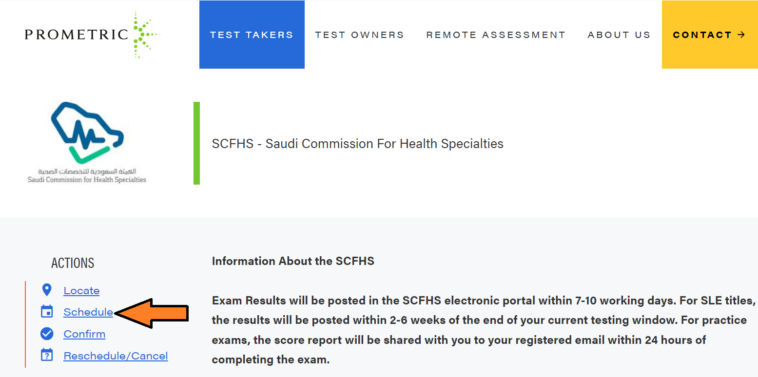
For Prometric:
- On the exam page, click the “Schedule” option to book your seat.
- If asked for an eligibility ID, provide it along with the first four letters of your last name.
For Pearson VUE:
- You will be redirected to choose a test center.
4. Choose a Test Center:
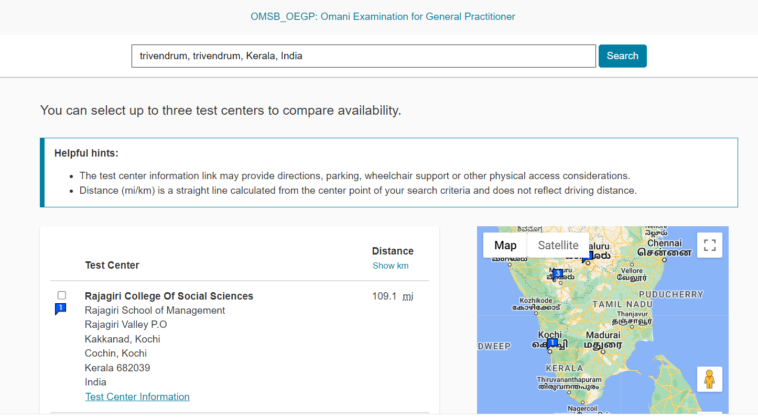
- Enter your preferred location to find nearby test centers.
- Select a convenient test center from the options provided.
5. Pick a Date and Time:
- Check the availability of test dates and times.
- Select a date and time that fits your schedule.
6. Provide Required Details:
For Prometric:
- Once you confirm the exam details, fill out the required form.
- Provide your address, contact number, email, passport ID, and other necessary details.
For Pearson VUE:
- Proceed to the payment page, as you have already provided the required details during registration.
7. Payment:
- Complete the payment for the exam fee.
- Once the payment is confirmed, you will receive a confirmation email with your exam details, including the date, time, and test center location.