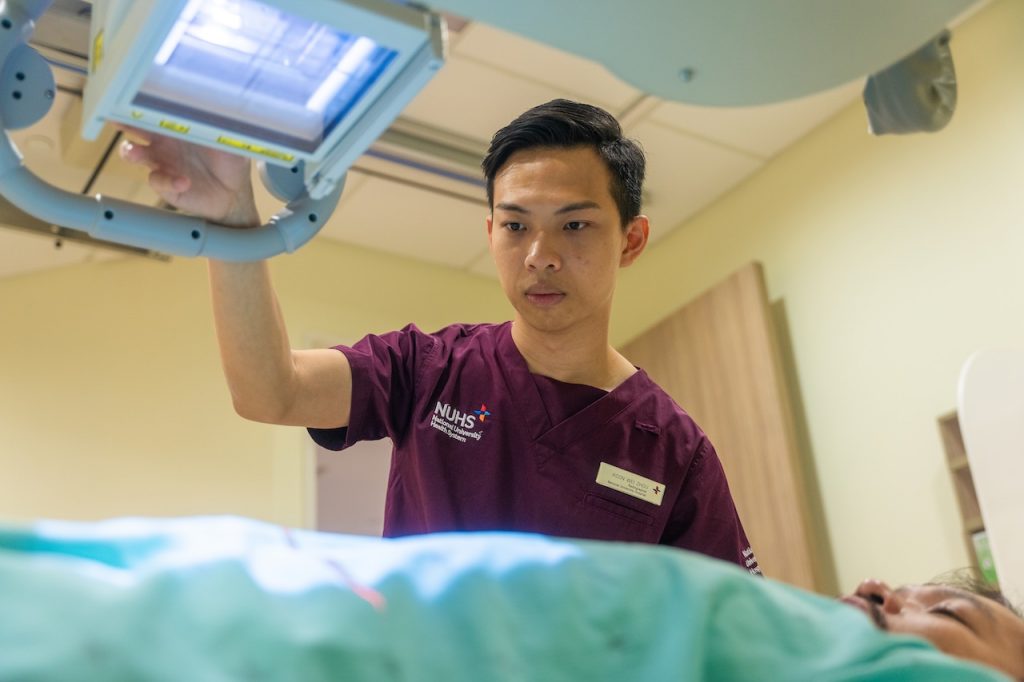
Allied healthcare radiology professionals—such as radiographers, radiology technicians, and technologists—play a crucial role in modern healthcare by producing diagnostic images essential for accurate diagnosis and effective patient management.
To work in the Gulf region, particularly in the UAE, Saudi Arabia, or Qatar, these professionals must obtain licensure from the respective regulatory authorities: the Dubai Health Authority (DHA), the Saudi Commission for Health Specialties (SCFHS), or the Qatar Council for Healthcare Practitioners (QCHP).
Purpose of the Exam
The licensing exams assess competencies in imaging technology, radiation safety, patient care, ethical conduct, and clinical reasoning. Passing these exams is necessary to practice legally as a radiographer or medical imaging technologist in Gulf healthcare facilities.
Eligibility Requirements
-
Educational Qualification: Degree or diploma in Radiography or Medical Imaging Technology from an accredited institution.
-
Work Experience: Typically, a minimum of 2 years of clinical experience is required. Some authorities may offer exemptions for fresh graduates under specific guidelines.
Licensing Requirement and Exam Overview
To obtain this license, candidates must pass a standardized licensing examination administered by the relevant authority. These Prometric-based exams verify that diagnostic imaging professionals meet the region’s high standards of clinical competence, safety, and ethical practice.
| Authority | Number of Questions | Duration | Passing Score | Exam Pattern |
|---|---|---|---|---|
| Dubai Health Authority (DHA) | 100 MCQs | 150 minutes | 55% | Computer-Based, Prometric |
| Saudi Commission for Health Specialties (SCFHS) | 150 MCQs | 3 hours | 55% | Computer-Based, Prometric |
| Qatar Council for Healthcare Practitioners (QCHP) | 150 MCQs | 3.5 hours | 50% | Computer-Based, Prometric |
Download : Radiographer Prometric MCQs(600+) – DHA, SCFHS, and QCHP
Key Content Areas Covered Across Exams
- Radiation Protection and Safety
- Imaging Modalities: X-ray, CT, MRI, Ultrasound, Nuclear Medicine, Fluoroscopy, Angiography
- General Anatomy and Physiology
- Patient Safety and Care
- Professionalism, Ethics, and Legal Responsibilities
This comprehensive guide outlines the essential pathway for allied healthcare radiology professionals seeking licensure in the Gulf, covering purpose, eligibility, exam format, and core content areas to help candidates prepare effectively.
DHA (Dubai Health Authority) Radiographer Exam
The DHA Radiographer exam is designed to assess the competency of professionals aiming to work in diagnostic imaging departments across Dubai’s healthcare sector. It covers a wide range of imaging modalities and professional topics, ensuring candidates are well-prepared for real-world clinical responsibilities.
- Exam Code: RADSP
- Duration: 150 minutes
- Number of Questions: 100 MCQs
- Pass Score: 55%
- Exam Fee: USD 240
Content Areas:
- Radiation Protection
- X-ray
- CT (Computed Tomography)
- MRI (Magnetic Resonance Imaging)
- Ultrasound
- Nuclear Medicine
- Fluoroscopy
- Angiography (Angio)
- General Anatomy
- Patient Safety
- Professionalism and Ethics
Saudi Arabia – SCFHS Radiography Technician Exam
The SCFHS Radiography exam is a comprehensive assessment for professionals seeking licensure in Saudi Arabia. It tests core technical knowledge across all major imaging modalities as well as safety standards and ethics, reflecting the Kingdom’s high-quality healthcare delivery goals.
- Total Questions: 150 MCQs
- Duration: 3 hours
- Passing Score: 55%
Content Distribution:
| Content Area | Weight (%) |
|---|---|
| Radiation Protection | 12% |
| X-ray | 13% |
| CT | 10% |
| MRI | 10% |
| Ultrasound | 10% |
| Nuclear Medicine | 10% |
| Angio | 4% |
| Fluoroscopy | 4% |
| General Anatomy | 17% |
| Patient Safety | 5% |
| Professionalism & Ethics | 5% |
🎯 Unlock Free Mock Test
Enter your email and select your exam category.
Qatar – QCHP Radiology Technician Exam
The QCHP Radiology Technician exam, governed by the Ministry of Public Health (MoPH) in Qatar, evaluates the theoretical and practical knowledge of radiographers in various modalities. It ensures professionals are competent to practice safely in hospitals and imaging centers throughout the country.
- Total Questions: 150 MCQs
- Duration: 3.5 hours
- Passing Score: 50%
Content Distribution:
| Content Area | No. of Questions |
|---|---|
| Radiation Protection | 19 |
| X-ray | 25 |
| CT | 15 |
| MRI | 12 |
| Ultrasound | 15 |
| Nuclear Medicine | 12 |
| Angio | 4 |
| Fluoroscopy | 4 |
| General Anatomy | 25 |
| Patient Safety | 10 |
| Professionalism & Ethics | 9 |
Qatar – QCHP Radiology Technologist Exam
This version of the QCHP exam, tailored for Radiology Technologists, has a similar structure but may slightly vary in topic weight. It confirms the applicant’s proficiency in cross-sectional and advanced imaging, patient care, safety protocols, and ethical practices.
- Total Questions: 150 MCQs
- Duration: 3.5 hours
- Passing Score: 50%
Content Distribution:
| Content Area | No. of Questions |
|---|---|
| Radiation Protection | 18 |
| X-ray | 19 |
| CT | 15 |
| MRI | 15 |
| Ultrasound | 15 |
| Nuclear Medicine | 15 |
| Angio | 6 |
| Fluoroscopy | 6 |
| General Anatomy | 25 |
| Patient Safety | 8 |
| Professionalism & Ethics | 8 |
Quick Tips for Success
To help you prepare effectively and boost your chances of passing the radiography licensing exams in the Gulf, keep these tips in mind:
1. Understand the Exam Blueprint
- Focus on the exam content distribution for each country.
- Allocate your study time according to weightage (e.g., General Anatomy and Radiation Protection often carry higher percentages).
2. Practice with MCQs
- Use Prometric-style mock tests with explanations.
- Aim to solve full-length practice exams under timed conditions.
3. Focus on High-Yield Topics
- Prioritize topics like Radiation Protection, X-ray, CT, and Anatomy, which appear in all three countries’ exams.
- Don’t ignore Professionalism, Ethics, and Patient Safety—they are small but essential.
4. Revise with Summary Notes
- Create or use concise revision notes and flashcards for last-minute review.
- Keep key formulas, dose limits, and modality-specific protocols handy.
5. Think Like a Clinician
- Expect both theoretical and case-based scenario questions.
- Apply clinical reasoning to imaging decisions and patient care situations.